What is Burning on the Streets of Europe?
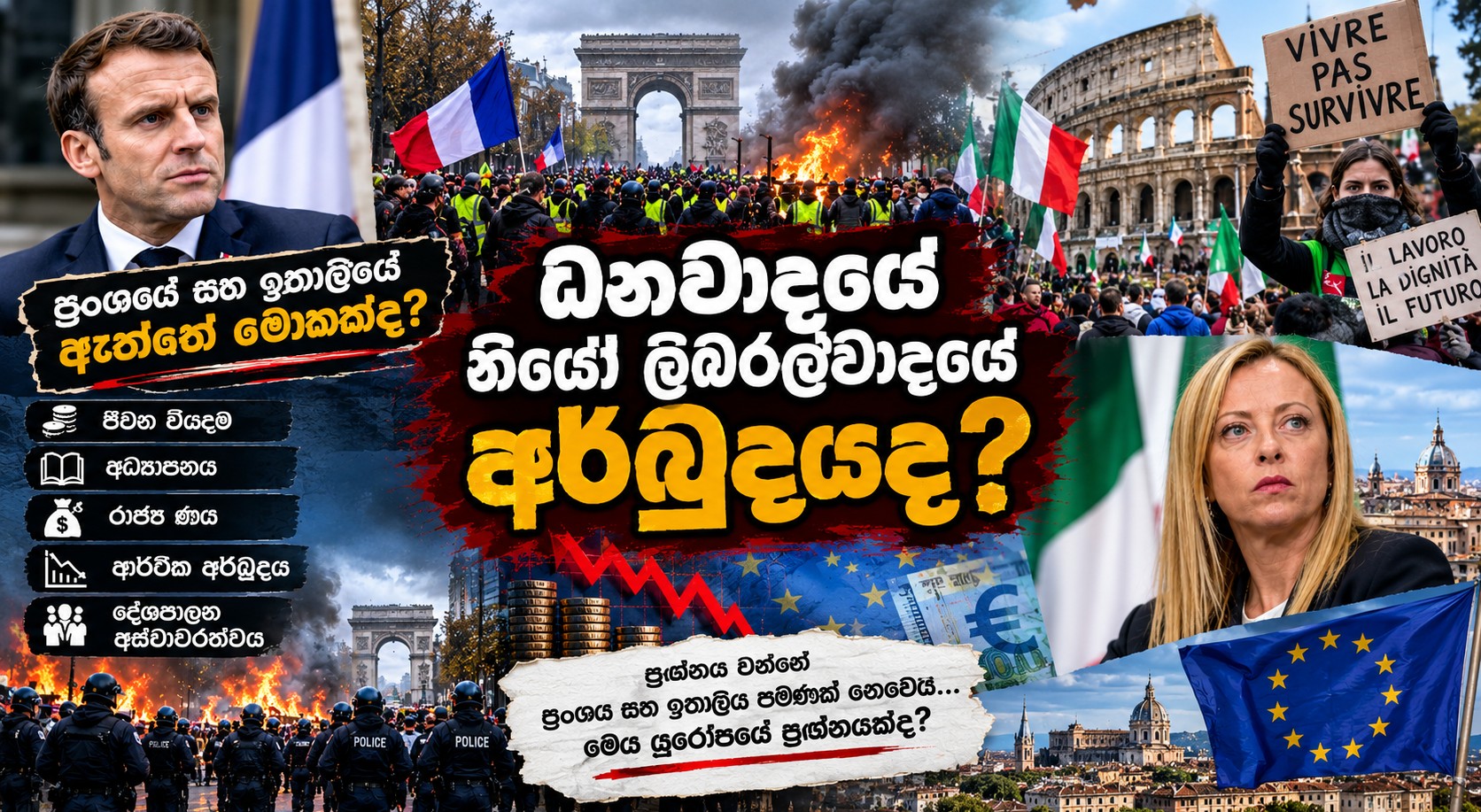
From France to Italy, the spreading public protests are not merely anti-government demonstrations. They are profound political questions about for whom the economy operates, who bears the burden of the crisis, and what place the people's voice holds within democracy.
Looking at the protests reported in October 2026 from European countries including France, Italy, Belgium, and Portugal, the question before us is very clear.
While Europe remains among the wealthiest economic regions in the world, why is it so difficult for its ordinary people to make a living?
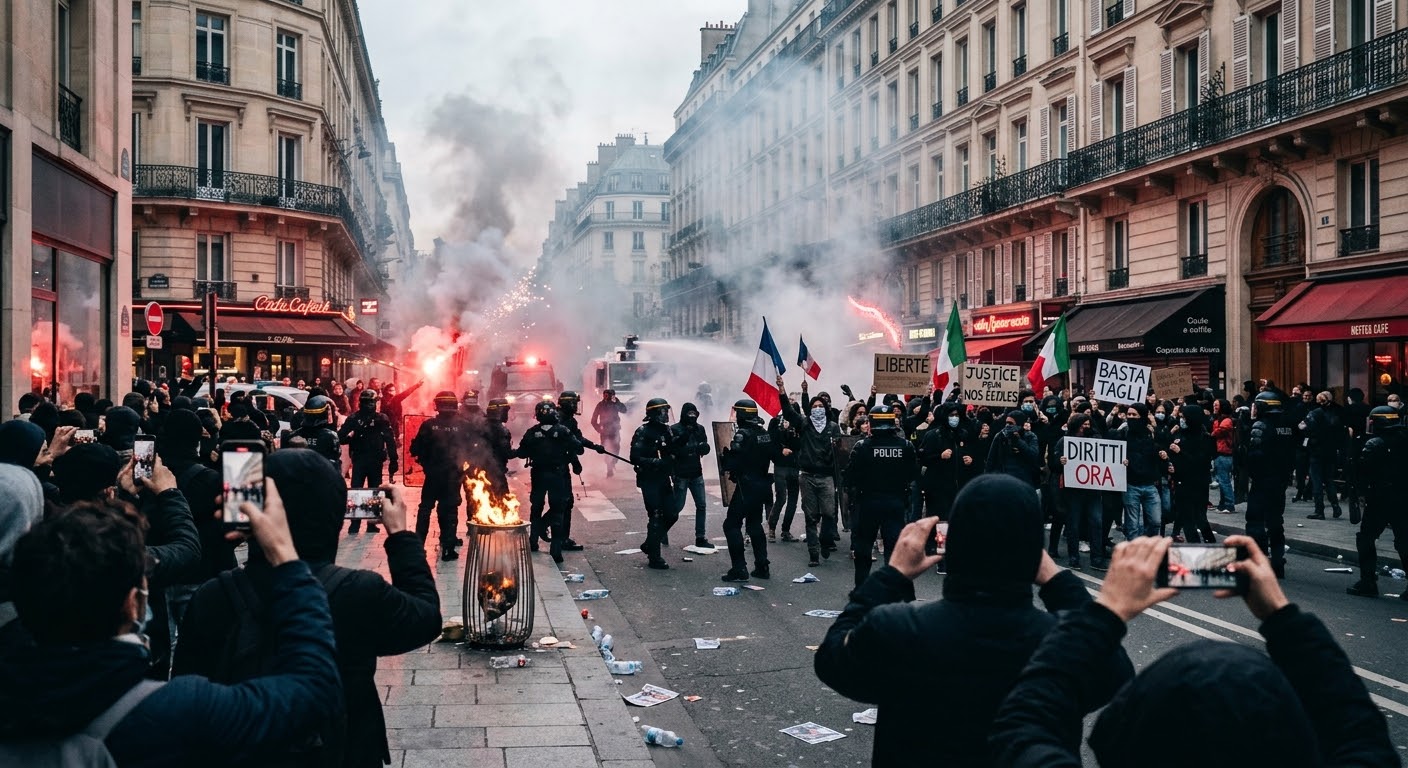
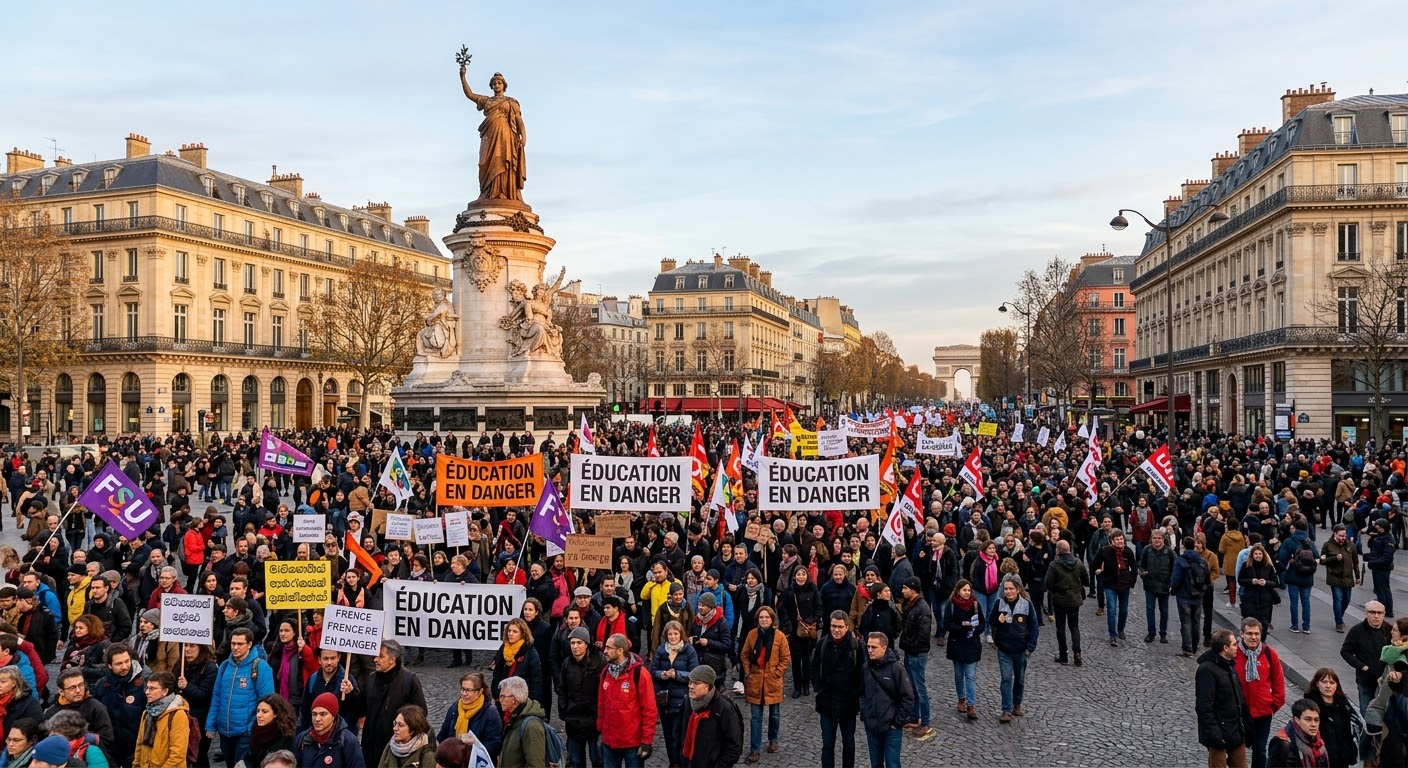
Dissatisfaction regarding food prices, housing rents, energy costs, education, wages, and public services is spilling onto the streets. The protests that erupted in France on October 17 and the transport sector protests in Italy against high fuel prices are recent examples of this.
Although this is a wave of separate protests with varying causes from country to country, they share common economic and social issues. Therefore, reading these events merely as a matter of law and order is not sufficient.
Macron’s France: Who Benefits from Economic Modernization?..
In 2017, Emmanuel Macron, who became the President of France at the age of 39, promised economic modernization, competitiveness, and a fresh approach to French politics.
However, as his term draws to a close, he faces more than just political attacks from the opposition. He also faces a crisis of trust regarding the outcomes of his economic policies, the public debt crisis, and the living standards of the people.
According to an Ipsos BVA poll published on October 11, 2026, only 15% of respondents expressed a favorable opinion of Macron. This indicates a severe decline in his popularity. However, such a poll is not a definitive prediction of election results.
The most important point here is not just the decline in Macron’s popularity, but the questions raised by the public concerning the economic policies he represents.
Increasing market competitiveness, encouraging investment, and controlling public spending may be standard objectives of economic policies.
However, depending on how they are implemented, their benefits and costs can be distributed unequally among different classes of society.
The growth of a country's economy and the improvement of its people's lives are not the same thing.
Even if investments increase, if people's wages cannot cover food and housing expenses; even if national production rises, yet the younger generation cannot find stable employment or an affordable home; fundamental questions arise about how economic success is measured.
That question is essential to understanding the protests emerging in France today.
The Promise and Reality of Neoliberalism...
Neoliberalism is an economic approach that emphasizes expanding the role of the market, encouraging private investment, increasing competitiveness, and in some cases, limiting public spending and regulation.
Its supporters argue that these policies can generate efficiency, investment, and economic growth.
Yet the question is: who receives the benefits of that growth?
The housing market may be lucrative for investments. But if it creates a situation where an ordinary worker cannot afford to buy a house or pay rent, a conflict arises between economic efficiency and social justice.
Private sector profits may rise. But if real wages do not increase to match price hikes, what the worker experiences is not economic growth, but a decline in their standard of living.
While reducing public spending can help control the budget deficit, what are the real costs if it is done in a way that weakens schools, hospitals, public transport, and social protection?
What should be criticized here is not the mere existence of market mechanisms. Rather, it is the questioning of state policy responsibility and social justice when social needs take a backseat to market decisions.
Can a system that privatizes profits and socializes losses be called a fair economy?
This is a fundamental question in Europe's current political debate.
The Public Debt Crisis: Who Pays the Bill?....
In discussions regarding Europe's economic crisis, public debt and budget deficits cannot be ignored.
According to Eurostat data for the year 2025, France's public budget deficit stood at 5.1% of Gross Domestic Product (GDP), with a public debt ratio of 115.6%. Italy's public debt ratio was 137.1%. These figures show that both countries are facing significant financial pressure.
However, an important distinction must be recognized here.
The mere existence of public debt does not validate the failure of capitalism. However, the way a debt crisis is addressed reveals the power relations between social classes.
When a government tries to reduce its budget deficit, it has several main options:
Reducing public spending, increasing tax revenue, redistributing the tax burden among various income groups, increasing economic growth and productivity, and minimizing tax evasion and inefficient public spending. The social outcomes of all these are not identical.
If, in the name of controlling public debt, support for low-income earners is reduced, funds allocated to schools are cut, and public services are weakened, the burden of maintaining economic discipline may fall
disproportionately on ordinary people.
On the other hand, financial problems can also be addressed by securing a fair contribution to state revenue, cracking down on tax evasion, and controlling unnecessary expenditures.
Therefore, the question is not merely whether public debt should be reduced.
In the name of debt reduction, which segment of society should make sacrifices? Are the classes that gained the most being asked to make a fair contribution?
The answers governments give to this question are important evidence of their political nature.
Italian Protests: Is Nationalism the Answer to Economic Pressure?......
Protests regarding the cost of living, fuel prices, and economic insecurity have emerged not only in France but also in Italy. On October 20, Reuters reported that protests by truck drivers against high fuel prices in southern Italy even disrupted the pasta manufacturing industry.
Although the problems Italy faces are similar to those of France, they are not entirely identical. Italy's high public debt, weak productivity growth, population aging, and reliance on imported energy place additional pressure on its economy.
In such a situation, the solutions put forward by right-wing nationalist parties can capture public attention.
In France, the National Rally represented by Marine Le Pen and Jordan Bardella also focuses on public safety, immigration control, and people's purchasing power.
Such parties have the ability to transform public dissatisfaction into political power. However, it must be separately examined whether their nationalist solutions provide adequate answers to the housing crisis, low wages, weakening public services, and income inequality.
Blaming immigrants or minority communities during an economic crisis may be politically easy. But such accusations do not solve the structural issues of the housing market, wage policies, tax systems, and public investments.
Translating people's genuine economic pain into nationalist slogans and providing a fair economic solution to that pain are two different things.
However, the issue cannot be ended by simply blaming right-wing parties. If traditional centrist and leftist parties also fail to solve the problems concerning people's living standards, it is no surprise that people search for alternatives.
An Economic Crisis? Or a Crisis of Capitalism?.....
What exists in Europe today is not a single simple economic crisis. The financial crisis, cost-of-living pressure, housing crisis, dissatisfaction with public services, and the breakdown of political trust are all interconnected.
Yet, it cannot be concluded from all this that capitalism has completely collapsed. Capitalism is not a system that operates in a single, rigid model. Tax policies, labor rights, social protection, public investment, and income distribution vary from country to country. Therefore, it is incorrect to say that all European countries face the exact same crisis in the exact same way.
Nevertheless, the fundamental contradiction here is clear. When private investment and profit become the main driving forces of economic decisions, people's essential needs and society's long-term well-being are bound to clash with them.
When housing is treated purely as an investment asset rather than a human right, the housing crisis can intensify.
When education and healthcare are treated merely as sectors where spending must be cut, society's long-term needs can be compromised.
When a worker's wage is treated merely as a cost of production, the worker's living condition may fail to remain a primary metric of economic policy.
This connects with the core arguments of the Marxist critique of capitalism: even though production is socialized, the benefits derived from it and the power to control economic decisions are not distributed equally among all members of society.
Accordingly, the visible crisis in Europe can be analyzed not as an immediate collapse of capitalism, but as a serious crisis concerning how the existing economic system relates to the social needs of the people.
Protests Are Not Merely a Law and Order Issue.....
Reports of violent clashes, looting, and property damage have emerged amidst recent protests in France. Such actions cannot be justified. Protecting public safety and responding lawfully to violent acts is the responsibility of the state.
However, there is an important distinction to be made here.
The right of citizens to protest peacefully and the accountability of individuals engaging in violent acts are not the same thing.
The occurrence of violence during protests does not turn all protesters into criminals. Similarly, the validity of people's economic grievances does not make the destruction of property a justified act.
Therefore, a government must do more than just ensure security; it must also address the social and economic issues raising these protests.
If an attempt is made to silence the people's voices through repression rather than addressing them, the streets may temporarily clear, but the dissatisfaction will not end.
Public order is not merely the silence of the streets. It must also be a social condition where people can live a life of dignity.
The Challenge Facing Europe’s Left.....
This situation also poses a significant challenge before Europe's leftist movements and working-class politics.
If people's economic pressure is not politically organized, it can flow in various directions. One section may turn towards right-wing nationalism. Another section may detach from politics altogether. Yet another section may organize for their rights through trade unions, student movements, and leftist political movements.
What the left needs here is not merely slogans expressing solidarity with protests, but a practical economic program that people can trust.
This should include:
• Wages matching the cost of living and strong labor rights.
• An affordable housing policy based on social needs rather than mere profit.
• Adequate public investment in education, healthcare, and public transport.
• Fair tax contributions from those with high incomes and wealth.
• Curbing tax evasion and public fund wastage.
• Ensuring energy security and affordable prices for ordinary citizens.
• Granting workers and the public greater participation in economic decision-making.
Merely criticizing capitalism without such a program is not enough. People must be clearly shown what an alternative economic path looks like.
Does Changing Individuals Solve the Problem?.....
The 2027 French presidential election is a critical juncture for political forces. According to the French Constitution, the same person cannot hold the presidency for three consecutive terms, meaning Macron cannot run for a third consecutive term in 2027.
The decline in Macron's popularity could create an opportunity for the 'National Rally' or other opposition forces. However, how today's dissatisfaction will translate into votes remains uncertain.
There is a question the people of Europe must ask themselves here: Will the housing crisis, cost of living, wage pressure, and issues regarding public services be resolved simply by electing a different president in place of Macron?
Will Italy's debt and productivity problems end merely through a change of government?
Or, even if governments change, will the problems faced by people recur if the fundamental direction of economic policies remains unchanged?
This is a deeper question than the popularity of individuals. Because even if political leaders change, if the way economic power is distributed and the core priorities of policies do not change, reasons for social dissatisfaction will arise once again.
What Does Europe's Crisis Teach Us?....
The protests emerging on the streets of France and Italy are not simple proof that all European countries have fallen into the identical economic crisis. However, they are a warning sign showing deep dissatisfaction regarding the cost of living, housing, wages, public services, and political representation.
Economic success should not be measured solely by a rising stock market or the volume of investments. It also includes whether an ordinary family can cover expenses for food, housing, education, and health from their income.
Capitalism can experience crises. But deciding whom to protect and upon whom to load the burden from the decisions taken to escape those crises is a political choice.
This is also the core of the critique against neoliberalism: should economic efficiency and profit become the ultimate goals of society, with human well-being subordinated to them? Europe's current protests bring that question back to the center of society.
Ultimately, if people in a wealthy country cannot live a life of dignity on the income earned from their own labor, questioning that country's economic success is justified.
When market stability matters more than people's lives, when budget figures take precedence over social justice, and when political power is more sensitive to the interests of economic powerhouses than the needs of the people, the crisis is no longer confined to just the economic realm. It becomes a crisis of democracy, social justice, and the very purpose of the economic system. That is the question echoing from the streets of Europe.
Does the economy exist for the people, or must the people live for the economy?
The answers European governments give to this question will be important for
understanding not only the future of Europe, but also the political future of other societies around the world.
Jayalathge Sunil Gamini ✍️