The Minister’s Peculiar Price Comparison
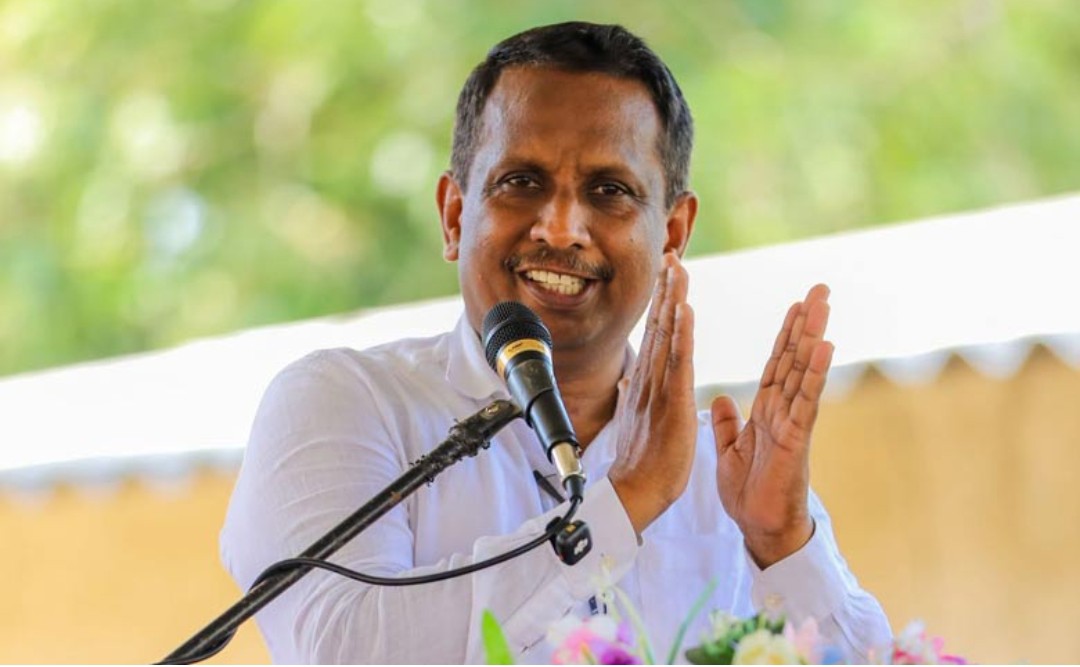
Recently, Samantha Vidyarathna, a minister in the National People's Power (NPP) government, made a rather peculiar price comparison in Parliament. On that occasion, he compared petrol prices in France and Sri Lanka, attempting to demonstrate that fuel prices in Sri Lanka are relatively lower than those in France.
In response, I published a post on my Facebook page briefly illustrating what percentage of the daily income of an individual living in each country would have to be spent on purchasing one litre of petrol.
That post attracted a considerable number of abusive responses from the NPP's online supporters. There were also sarcastic remarks and mockery from some Sri Lankan residents in France who support the NPP. Although I responded to some of those comments, I believe it is necessary to address the issue collectively. Therefore, I am setting out the following explanation.
According to the figures presented by the Minister in Parliament, a litre of Octane 95 petrol costs approximately Rs. 755 in France, whereas the same litre of fuel costs Rs. 490 in Sri Lanka.
At first glance, this comparison suggests that petrol in Sri Lanka is Rs. 265 cheaper than in France.
However, the most important economic factor the Minister either overlooked or deliberately ignored is the difference in income levels between the people of the two countries.
Can we determine whether a product is affordable to ordinary people simply by comparing its price?
The Difference Between Income Levels in France and Sri Lanka
According to 2024 data from INSEE, the French National Institute of Statistics and Economic Studies, the median monthly disposable income per person, measured in terms of living standards, is €2,228.
At the exchange rate prevailing on 17 November 2026, this is equivalent to approximately Rs. 815,000 in Sri Lankan currency.
According to the preliminary findings of the Household Income and Expenditure Survey for the first quarter of 2025, published by Sri Lanka's Department of Census and Statistics, the median monthly household income is Rs. 75,882.
Taking the average household size as 3.4 members, the estimated monthly income per household member is approximately Rs. 22,318.
This is an approximate estimate of income per person, not an officially published median net individual income.
Now, Let Us Examine the Real Cost of a Litre of Petrol!
Let us compare the price of Octane 95 petrol in both countries.
The monthly income per person in France, converted into Sri Lankan rupees, is approximately Rs. 815,093. In Sri Lanka, the estimated monthly income per person is only around Rs. 22,318.
The price of one litre of petrol in France, converted into Sri Lankan rupees, is approximately Rs. 754. In Sri Lanka, the price of one litre is Rs. 490.
The daily income of a person living in France, expressed in Sri Lankan rupees, is approximately Rs. 27,170. In Sri Lanka, the estimated daily income per person is only Rs. 744.
Based on these figures, a person living in France spends only approximately 0.093% of their monthly income to purchase one litre of petrol.
In contrast, a person living in Sri Lanka has to spend approximately 2.20% of their monthly income to purchase the same quantity of fuel.
If we calculate this in relation to daily income, a person living in France spends only around 2.78% of their daily income on one litre of petrol.
However, a person living in Sri Lanka has to spend approximately 65.87% of their daily income to purchase just one litre of petrol.
What do these statistics reveal?
A person in France can purchase one litre of petrol by spending just 2.78% of their median daily income.
But a person in Sri Lanka has to spend 65.87% of their estimated daily income to purchase the same quantity.
In other words, according to this comparative indicator, the affordability burden of purchasing one litre of petrol in Sri Lanka is approximately 23.7 times greater than in France.
Although petrol is more expensive in France in absolute monetary terms, it is far more affordable relative to people's income. In Sri Lanka, however, the cost of one litre of petrol is considerably more difficult for ordinary people to bear when measured against their income.
What Is Fundamentally Wrong With the Minister's Comparison?
There are several questions we must ask the Minister.
Why did he not compare the income levels of people in both countries before attempting to demonstrate that petrol is more expensive in France than in Sri Lanka?
Why did he ignore the enormous gap between the monthly income of an ordinary person in France and that of an ordinary person in Sri Lanka?
Does the government not acknowledge that the real economic burden of fuel prices on people is determined not merely by the price per litre, but also by the income required to afford it?
Can a government that has failed to sufficiently improve people's wages and income levels justify fuel prices in Sri Lanka simply by pointing to the prices in another country?
Fuel Prices Are About Much More Than the Cost of a Litre of Petrol!
In a country like Sri Lanka, the impact of rising fuel prices is not limited to vehicle owners.
It affects bus fares, three-wheeler fares, school transport costs, agricultural production expenses, the transportation of goods and ultimately the prices of food and other essential commodities.
Therefore, ignoring people's income levels, the cost of living and their purchasing power when discussing fuel prices is a serious omission.
Simply stating that petrol is more expensive in France than in Sri Lanka does not prove that fuel prices in Sri Lanka are reasonable.
The economic hardships faced by people in one's own country cannot be concealed merely by pointing to the prices of goods in another country.
Finally, this is what we have to say to the government, as well as to those who resort to abusive language and sarcastic mockery in its defence.
The success of a country's economy cannot be judged solely by the statistics presented in Parliament. It must also be measured by the economic relief that ordinary citizens actually feel in their pockets.
The fact that a litre of petrol costs Rs. 755 in France does not automatically make it unaffordable for the French people. Likewise, the fact that a litre of petrol costs Rs. 490 in Sri Lanka does not automatically make it affordable for the people of Sri Lanka.
The real economic question is how much of people's income is consumed by the cost of fuel.
A government should be capable of providing its people with sufficient income to live with dignity, rather than attempting to silence them with price comparisons or mislead them through selective statistics.
The success of a country's economy is not measured by the price of a litre of petrol, but by how much effort an ordinary person has to make to afford that litre.
Jayalathge Sunil Gamini ✍️