The 22nd Amendment and confidence in the judiciary
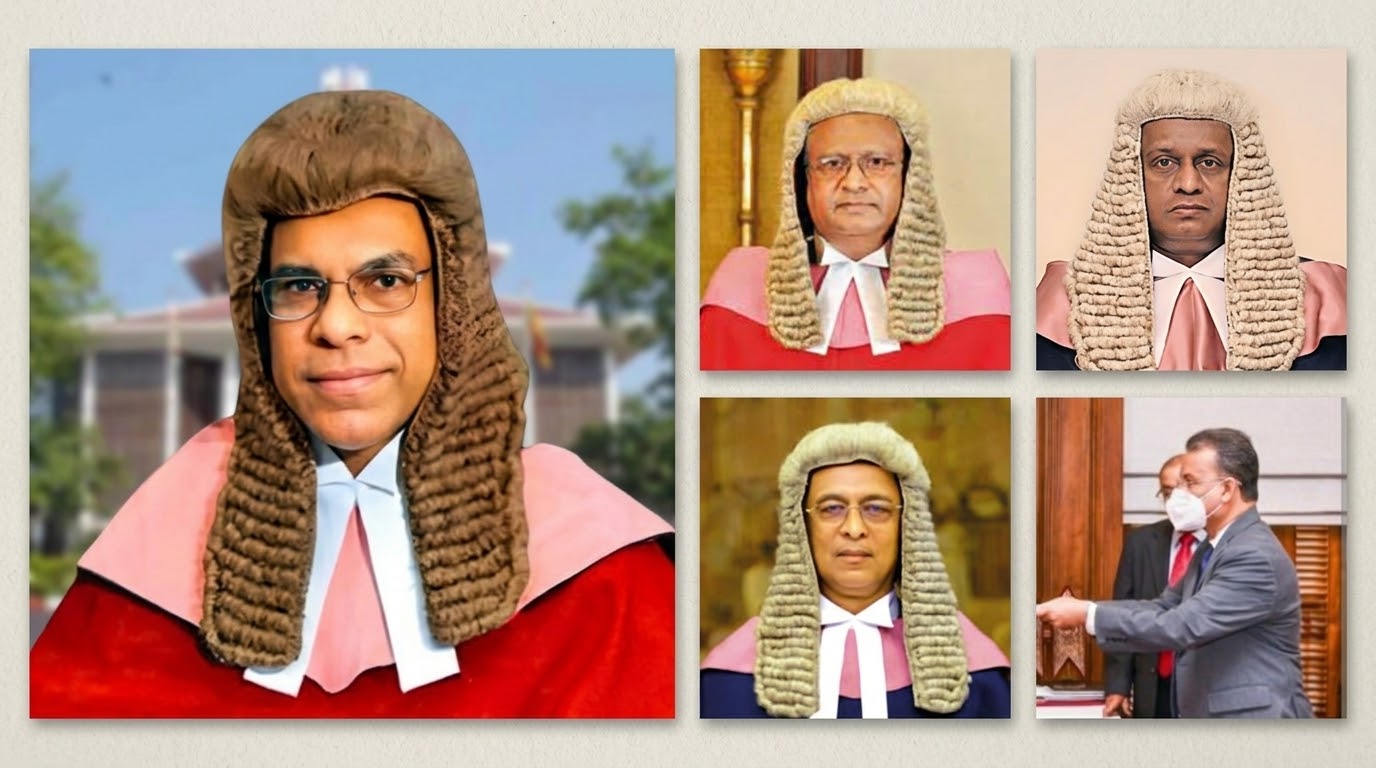
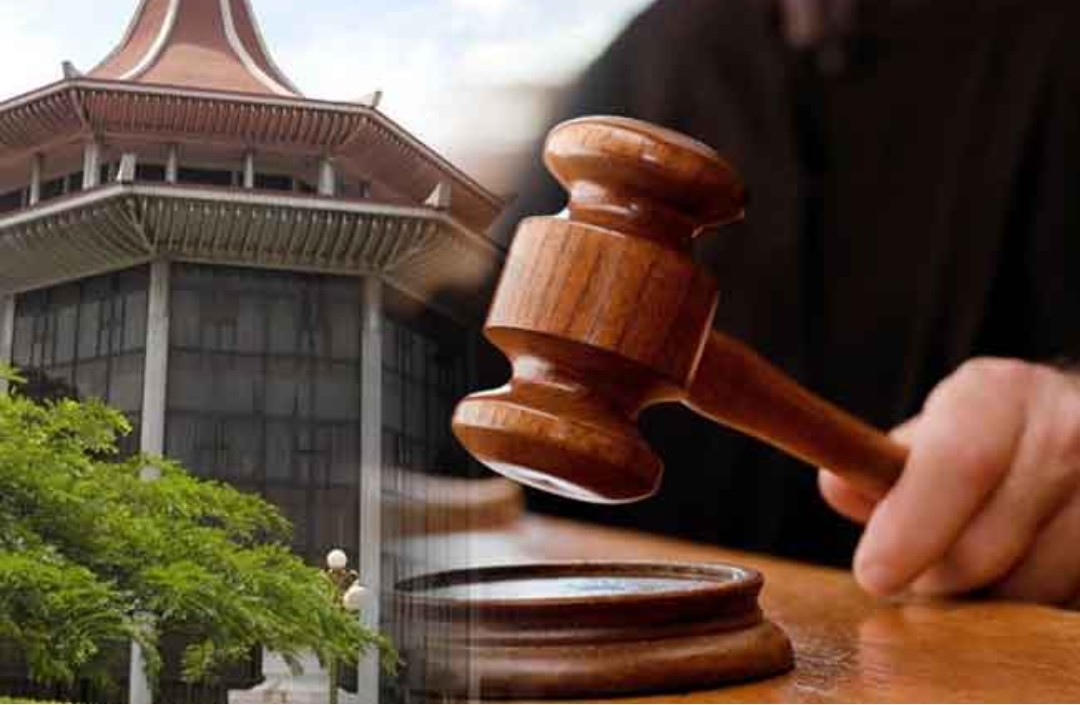
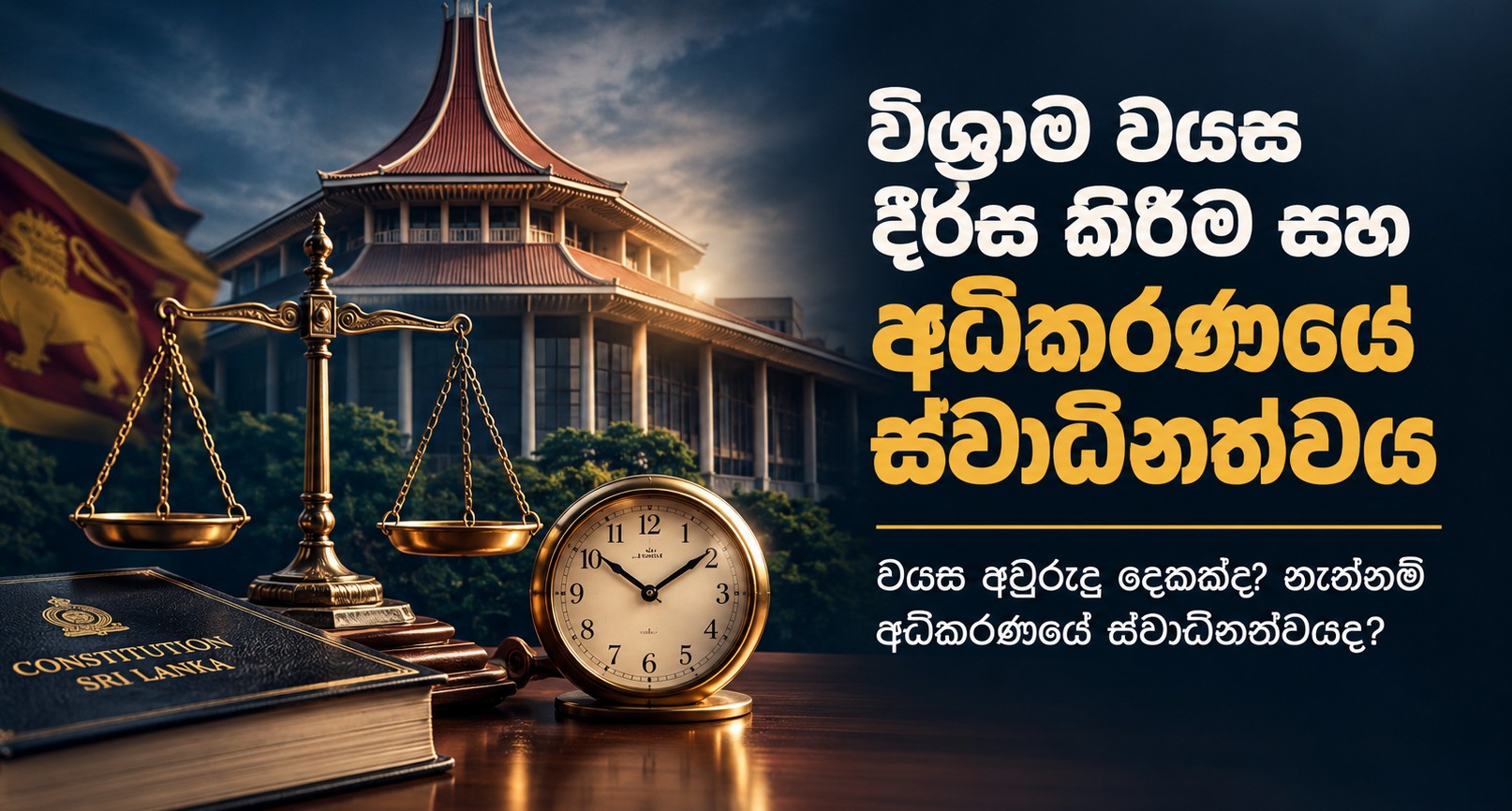
The situation that has arisen before the Supreme Court regarding the 22nd Amendment to the Constitution raises serious questions about democracy and judicial independence in Sri Lanka.
This is not a case regarding an ordinary bill.
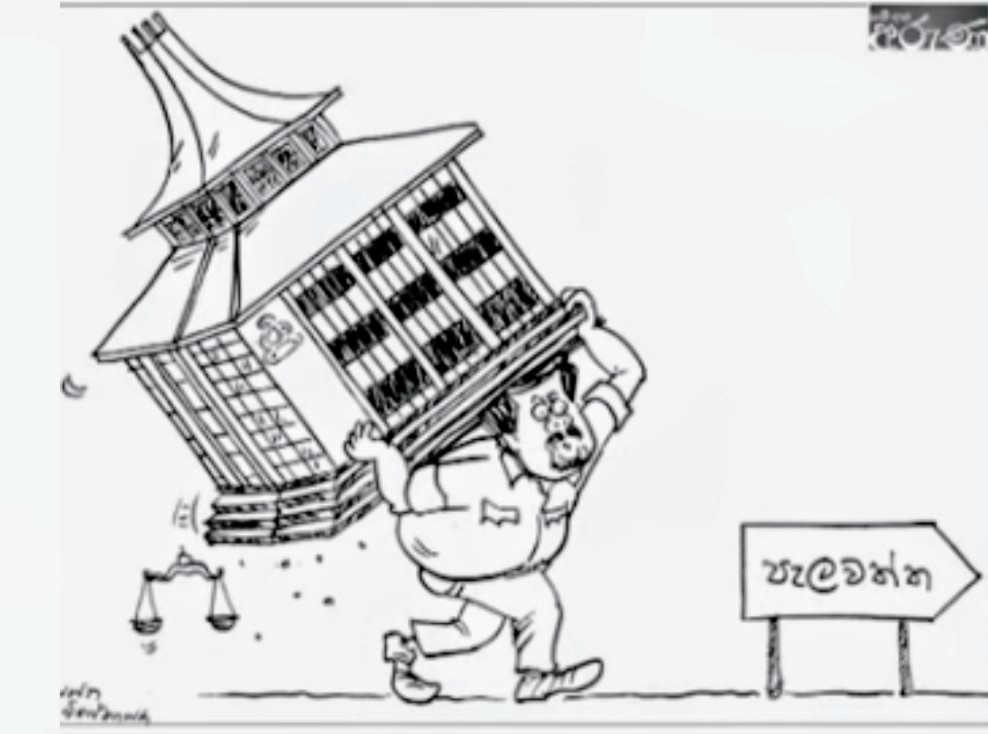
The issue here is a constitutional amendment that will extend the term of office of the Supreme Court judges themselves.
If so, the public has the right to question the composition of the judicial bench that will hear this case.
It is not disrespectful to the judiciary.
It is a question asked to protect judicial independence.
“A judge should not be a judge in his own case”.....
There is a fundamental principle of natural justice recognized in the world.
Nemo judex in causa sua.
Its simple meaning is, “No one should be a judge in his own case.”
This does not mean that the judge is necessarily a biased person. This means that if the judge has a personal or institutional interest in the case, that situation can affect public confidence.
Therefore, a very important principle of law is, “Justice must not only be done; it must also be seen to be done.”
That is, it is not enough to justly do justice. It must also be seen by the public that it is done fairly.
So what is the problem with the 22nd Amendment?...
The sensitive point here is that questions also arise regarding the provisions for increasing the retirement age of Supreme Court judges through the 22nd Amendment.
That is, whatever the final decision in this case, it can have a direct impact on the tenure of the current judges of the Supreme Court.
In such a situation, is it appropriate for the current Chief Justice of the same court to be the head of the bench hearing the petitions? Is it wrong to question this? No.
“It is not that the Chief Justice is biased”...
We cannot say that the Chief Justice or any other judge is giving a biased verdict in this case.
Evidence is needed to make such an allegation.
But that is not the question. The question is,
“Can a reasonable person of common sense, looking at this situation, have doubts about the impartiality of the judiciary?” That is a different question.
There is also a question about the appointment of judges who are less senior...
Another sensitive issue here is the composition of the judicial bench.
When there are judges who are more senior, it is natural for the public to question the appointment of a bench of judges who are relatively less senior to hear such an important constitutional issue.
This does not mean that a judge of lesser seniority is not qualified to hear a constitutional question. That is a false argument. The value of a judge is not determined solely by his or her length of service.
But the question here is something else.
On what principle was the composition of the bench decided on such a sensitive constitutional issue? That should be clarified.
This is where the request for a Full Bench is important...
This is not a normal legal issue.
It is a matter that affects the basic structure of the country's Constitution, judicial independence and the tenure of Supreme Court judges.
In such a situation, it is not unreasonable for the question to arise that would it not be more appropriate to hear this matter before a Full Bench comprising all the judges of the Supreme Court?
It cannot be said that having a Full Bench alone will result in a correct decision.
But in such a sensitive matter,
It is very important to create public confidence that “the court showed maximum transparency when making a decision about itself”.
This is not an attack on the court....
Today, when some people ask such questions, they say, “Don’t criticize the court.”
But democracy does not work that way.
The court should be independent. The public should also have the right to make reasonable criticism of the decisions and actions of the judiciary. Judicial independence does not mean giving judges unquestionable power.
What it really means is that judges make decisions in accordance with the law without political influence. Public trust is essential to protect that independence.
It is not enough to just say “we trust”…
We can have personal trust in the judges of the court.
That is a good thing.
But a system for a constitutional institution should not be built on personal trust that says, “we trust them.”
It should be built on the institutional trust that, “there is a procedure here that leaves no room for doubt.” That is what a strong judiciary is.
The power that the Chief Justice gets today will be given to another Chief Justice tomorrow.
It is very important to understand this.
Today, a judge of our choice can be the Chief Justice. Tomorrow a judge we don’t like may become the Chief Justice.
If we remain silent about how we use power today, tomorrow we will have less moral strength to oppose it when someone else uses it for a different purpose.
Therefore, the question of democracy is not,
“Who is in power today?”
The question is, “Do we create a system that cannot be misused, no matter who is in power tomorrow?”
The case of the 22nd Amendment is very special.
When the court is reviewing a law that directly affects its own institution,
• How was the bench selected?
• Is there a need for the Chief Justice to recuse himself?
• Why were senior judges not included?
• If the request for a Full Bench was rejected, what was the reason?
• How is the public trust protected after all this?
There must be clear answers to these questions.
The argument that “it is possible by law” alone is not enough...
In our country, many things can be done by law. But the final answer to all questions in a democratic state is not,
“it is possible by law.”
There is another question. “Was it done in a way that protects the honor of an institution and public trust?”
While protecting the letter of the law, the spirit of the law must also be protected.
What is most needed at this time is transparency....
What the court requires from the public is not blind trust.
What the public needs is the belief that “there is no room for personal gain here.”
Every possible step must be taken to instill that trust. Especially in a case regarding a constitutional amendment that could extend the retirement age of judges in the court itself, it is doubly important.
In the end, we should ask the same question.
Is there any evidence that the Chief Justice is biased? That is a separate question.
But, “Is this trial organized in a way that instills public confidence in impartiality?”
That is an even more important question. Because the strength of the judiciary does not come from a verdict alone. Its strength comes from
the public’s confidence in the institution that gives that verdict.
Therefore, the question we are asking today regarding the 22nd Amendment to the Constitution is not a personal insult to the Chief Justice or any judge. It is a much bigger question.
“Are we taking maximum steps to protect public confidence in the judiciary of Sri Lanka?” That question should not be answered by judges alone today.
Lawyers, politicians, the media and all citizens should answer it.
Because the standard we set for the independence of the judiciary today is the standard of democracy that our children will inherit tomorrow.
The judiciary must be independent of political power.
The judiciary must also be independent of suspicions of personal gain.
It is also the responsibility of the judiciary to ensure that public confidence in the judiciary is not undermined in any way.
It is not enough to simply do justice.
Justice must also be seen to be done.
Jayalathge Sunil Gamini ✍️