'Sirasa' and politics
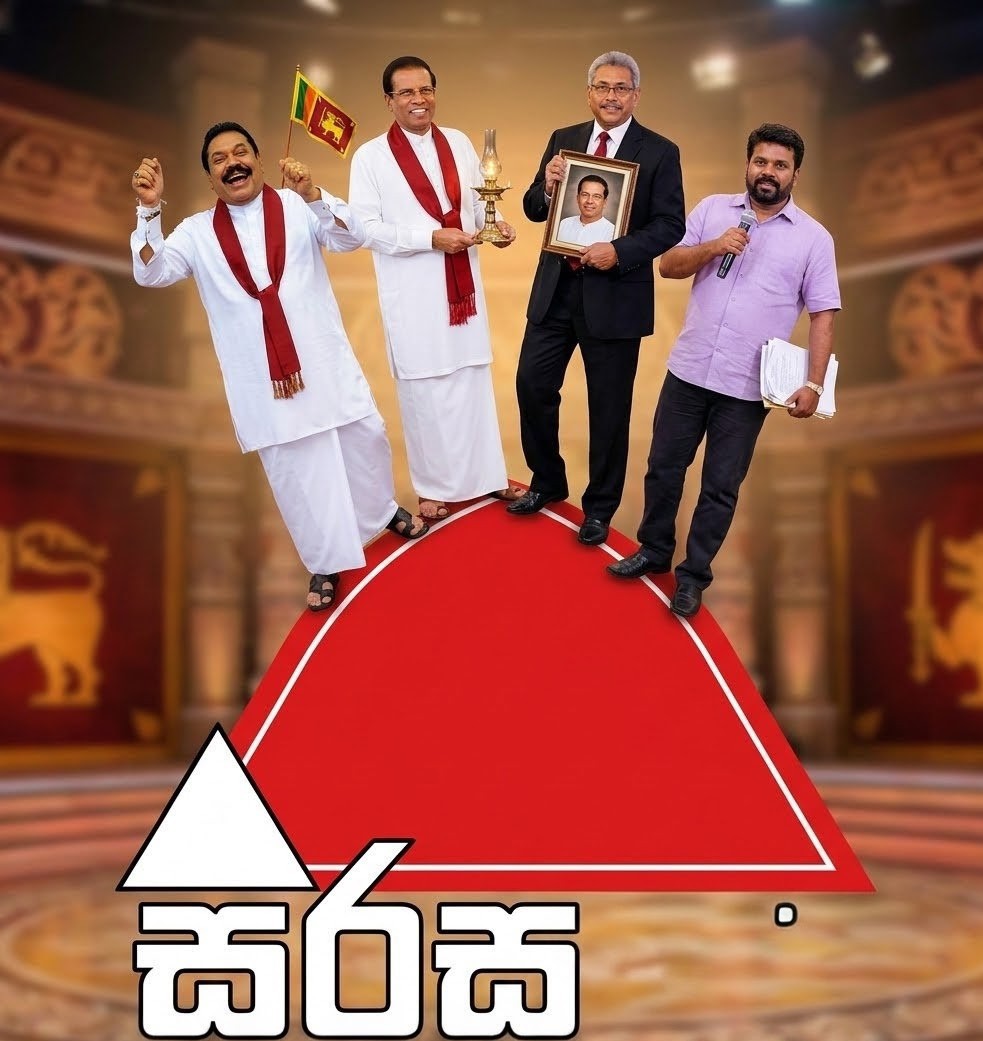
From public frequency to political power centers...
The name ‘Sirasa’ cannot be ignored in a discussion of media power in Sri Lanka.
But Sirasa should not be talked about only in terms of its popular programs, presenters or news broadcasts.
The relationship between media power, public frequency and political power should also be questioned.
Whose frequency is it?......
Just because a private media organization uses a radio frequency, that frequency does not become the private property of that organization.
It is a limited radio-frequency spectrum resource regulated by the state. The data released by the Telecommunications Regulatory Commission of Sri Lanka (TRCSL) lists frequencies for Sirasa FM in various areas under MBC Networks (Pvt) Ltd.
So the fundamental question is
What is the public responsibility of a media organization that obtains licenses to use a very important limited resource for public communication? It is a question that applies not only to Sirasa but to all private broadcasting media organizations.
From Sirasa to political power centers...
There is a point that is most noteworthy here.
It is recorded that several people who held prominent positions in the Sirasa/MTV/MBC media environment later held high media positions under the country's presidents or prime ministers.
Kingsley Ratnayake..
A name that cannot be forgotten in this list is Kingsley Ratnayake. In the 2019 government Guide to Media, he is officially mentioned as the Channel Head of Sirasa FM.
In April 2021, he left the Sirasa media network and became the President's Spokesperson for President Gotabaya Rajapaksa. It has also been reported that he assumed that position in the Presidential Media Division.
He himself had also stated that he left Sirasa Media Network after 28 years. Accordingly, this is a very clear career path:
Sirasa → Presidential Media Spokesperson.
Dharmasri Bandara Ekanayake...
He had worked as Program Director of Sirasa TV and News Director of News1st and was appointed as President Maithripala Sirisena's President's Media Director in 2015. That is,
Sirasa → Presidential Media Director.
Sugeeshwara Senadheera....
Here is another unique example.
It has been reported that he served as the first News Director of Sirasa/MTV/MBC.
After that, it is reported that he worked as International Media Director for three Presidents namely Mahinda Rajapaksa, Maithripala Sirisena and Gotabaya Rajapaksa and was appointed as Media Advisor to Prime Minister Dinesh Gunawardena in 2022.
It can be shown as follows:
Sirasa → Mahinda → Maithri → Gotabaya → Dinesh Gunawardena.
This is a strong example of the same media professional holding media roles in a number of different political power centers.
Sarath Kongahage..
Sarath Kongahage is also a name relevant to this discussion. According to a Daily FT report, he had worked as Station Director at Sirasa and MTV and later as a Presidential Media Advisor. He also held political positions as a Member of Parliament and Chief Minister of the Central Provincial Council.
Accordingly, another journey is seen here:
Sirasa/MTV → Presidential Media Advisor → Political Positions
Chandana Suriyabandara....
This is the most recent example.
Chandana Suriyabandara, who has worked in the Sirasa media sector for a long time, was appointed as the Media Advisor to President Anura Kumara Dissanayake on February 24, 2025. This has been officially announced by the Presidential Secretariat.
The official website of the current Presidential Media Division also refers to him as the Media Advisor to the President.
Accordingly:
Sirasa → Presidential Media Advisor
So what is the real issue?...
A very important distinction must be made here.
It is not said that just because these individuals held political positions, their media professional independence should be questioned.
This does not mean that there is a legal or moral prohibition on a journalist later accepting a political position.
However,
When professionals from the same media environment go to high positions in the media machinery of the President and Prime Minister under different governments, it is natural for that media-political relationship to come under public scrutiny.
That question must be asked.
“Public frequency” and “media power”...
There is another serious aspect here.
Sirasa FM is not just a business run from a private building.
The radio frequency it uses is part of the country’s limited spectrum resources. The TRCSL data shows a number of frequencies for Sirasa FM that are linked to MBC Networks.
So the question should not be: “Who owns Sirasa?”
The more important question is
“How accountable is a media institution that uses public resources to the public?”
The power of the media must be checked…
In a democracy, the media must be questioned by the government. It must be questioned by the opposition. It must be questioned by public officials. It must be questioned by business power.
The public must also be allowed to question its own media power and political connections.
That questioning is not an opposition to Sirasa.
Nor is it a personal accusation against any individual. It is a bigger question. Where is the line between media power and political power?
When a journalist who questioned the government yesterday becomes a media advisor to the government today, what is his new responsibility?
When a leading official of a media institution later becomes a media spokesperson for a president, what should the public know about that transformation?
Is there sufficient transparency about the relationship that media institutions that use public frequencies maintain with political power?
These are not relationships that should be banned. But they are not relationships that should not be questioned either.
Ultimately...
This is a time to question not only the individuals who have gone into politics, but the entire media system in Sri Lanka.
Media institutions that use public frequencies...
Relationships with political power...
Political appointments of journalists...
Media independence...
Public accountability...
All of this comes down to one question:
“To whom is the media, which uses the people’s resources to shape public opinion, ultimately accountable?”
To the ruler?
To the media owner?
To political power?
Or to the public?
The answer should be simple.
The ultimate responsibility of the media, which derives its power from the public's vote, should lie not with any politician or political party. It should lie with the public.
Jayalathge Sunil Gamini ✍️