Beyond catching thieves, accountability to the people is needed
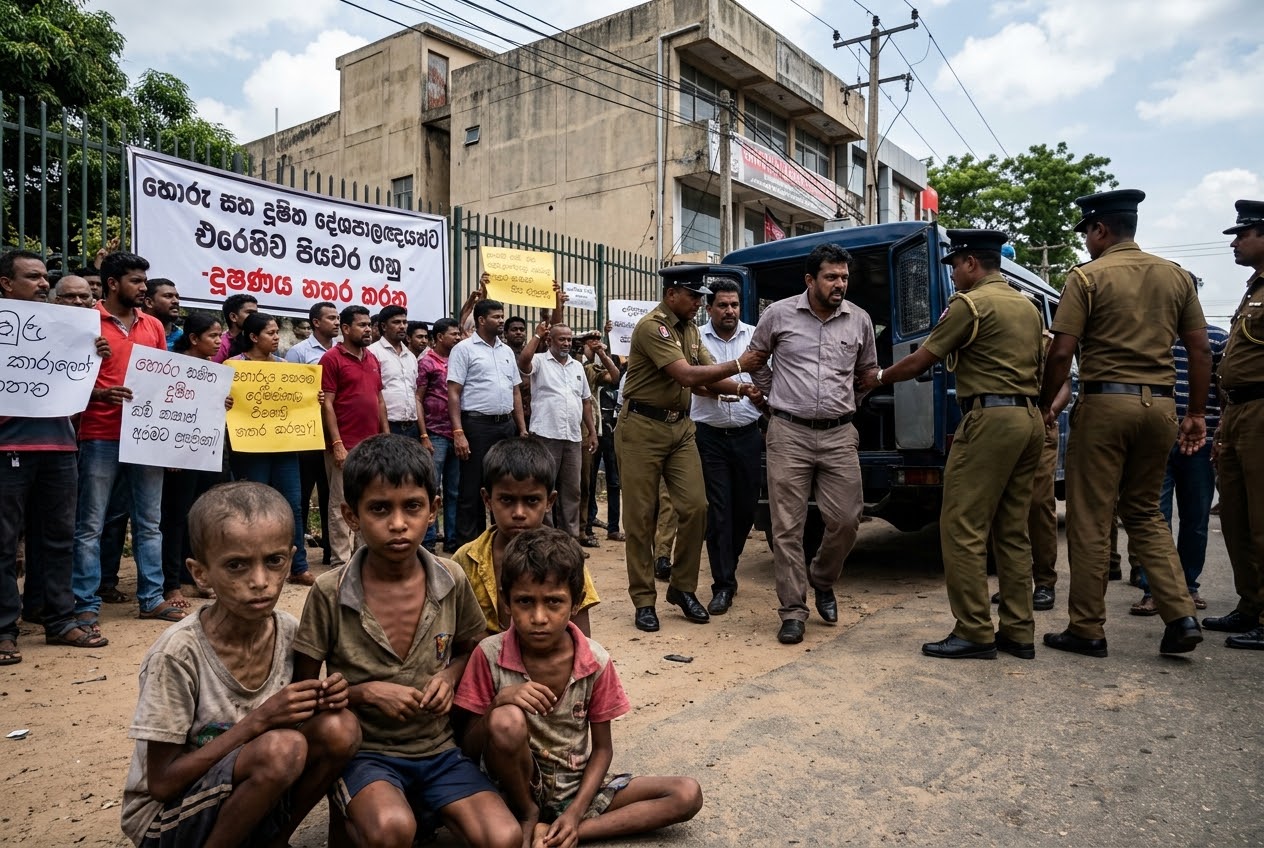
A major political theme of the current government has been,
“Catching thieves.”
“Stopping theft.”
“Protecting public money.”
It is natural for these slogans to attract public attention.
It is necessary to implement the law against corruption. Those who misuse public money must also be held accountable. These should not be limited to incidents that occurred during the previous government.
Also, it is not enough to simply say that there is one law for everyone. They should also be seen in action. However, in the past few weeks, during the process of removing unauthorized constructions on the coastal strip, the law that was implemented throughout Sri Lanka was ineffective due to political influence and nepotism on the Matara-Polhena beach, and a separate law was implemented for Polhena, which was revealed to the entire country.
That is the extent of the difference in the talk and the action on the legal side.
Catching thieves and the economy...
According to data published by the World Bank, poverty in Sri Lanka was 24.5% in 2024, double the level of 11.3% in 2019. Food prices have doubled between 2021–2024.
Meanwhile, the World Bank points out that underweight among children under the age of five has increased from 12.2% to 17% between 2021–2024, and stunting from 7.4% to 10.5%.
Therefore, the question that the people are asking the government today is,
“How many thieves have been caught?”
“How much has my life improved?”
Therefore, this is the practical accountability that should be demanded from the government.
1. Present an annual “People’s Economic Report”.
Not only GDP growth, but also indicators such as poverty, real wages, employment, food prices, food insecurity, malnutrition and household debt should be presented to the people in a single report every year.
2. Show how “GDP growth” translates into people’s income.
Instead of saying that 5% economic growth is enough, the number of jobs created by that growth, real wage growth and the purchasing power of families should be made public.
3. Create monthly accountability on food prices.
Price changes of essential foods such as rice, lentils, eggs, milk, vegetables and the cost of a weekly food package for a low-income family should be made public on a monthly basis.
4. Give a measurable target for child malnutrition.
District-level data on underweight, wastage, and attrition should be regularly published, and year-on-year reduction targets and progress should be shown to the public.
5. Publish the “final results” of corruption investigations.
Official data on not only the number of complaints and investigations, but also the number of charges filed, court actions, legally recovered state resources, and closed cases should be published annually.
6. Open up government spending to the public.
Information on major government projects, procurements, contracts, revised cost estimates, and final spending should be made public in an easily verifiable manner.
7. Show “how the people got the money saved” rather than “how much money was saved?”
Explain to the public how the money saved by reducing corruption or making public spending more efficient was used for health, education, nutrition, social security, and productive investment.
8. State time-bound goals.
Instead of general promises like “building the economy,”
Specific goals and time-bound goals should be stated for:
How much will poverty be reduced?
How much will child malnutrition be reduced?
How much will real wages be increased?
How many new quality jobs will be created?
How much will food insecurity be reduced?
The people want results, not promises...
Those who stole should also be brought to justice. But at the same time, the government should also be responsible for reducing poverty, reducing malnutrition, controlling food prices, increasing real incomes and creating quality jobs.
Ultimately, the success of a government should not be measured only by how many people the government has arrested.
How many people did the government lift out of poverty?
How many people did it provide good jobs?
How many people did it increase food security?
How many children did it save from malnutrition?
It is important to be a “country that catches thieves”.
Even more important is to be a “country that catches thieves while building an economy where the people can live with dignity”.
For that, we ask the government to give numbers, not slogans. Give targets, not promises. Show results, not announcements.
Jayalathge Sunil Gamini ✍️