Relief from the Budget, or Just Beautiful Statistics?
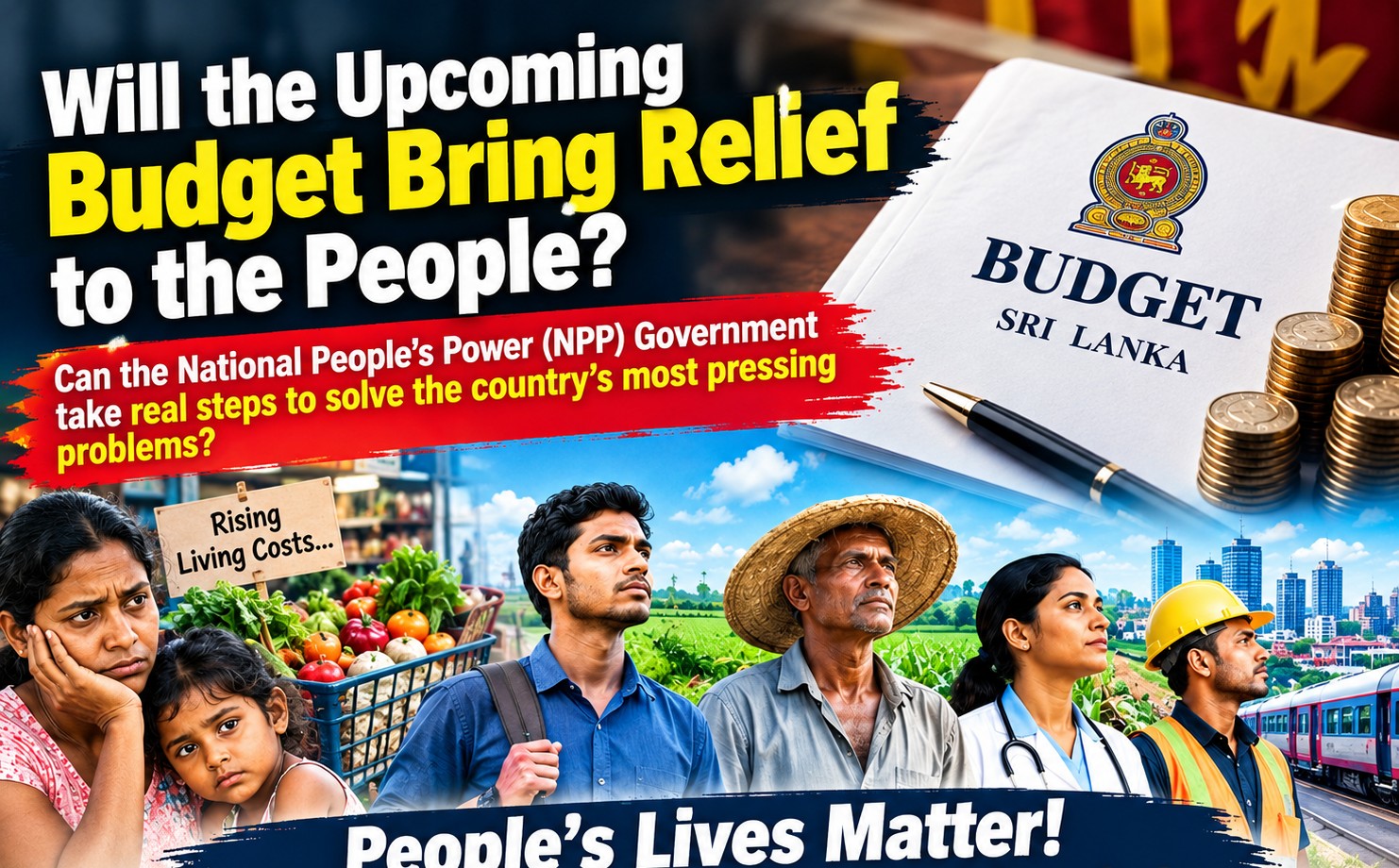
A government budget is not merely a collection of statistics on revenue and expenditure. It is a political and economic document that determines who bears the burden of the country's economy, who receives relief, how state resources are distributed, and for whose benefit the future is built.
It is upon this exact foundation that the upcoming budget of the National People's Power (NPP) government must be viewed.
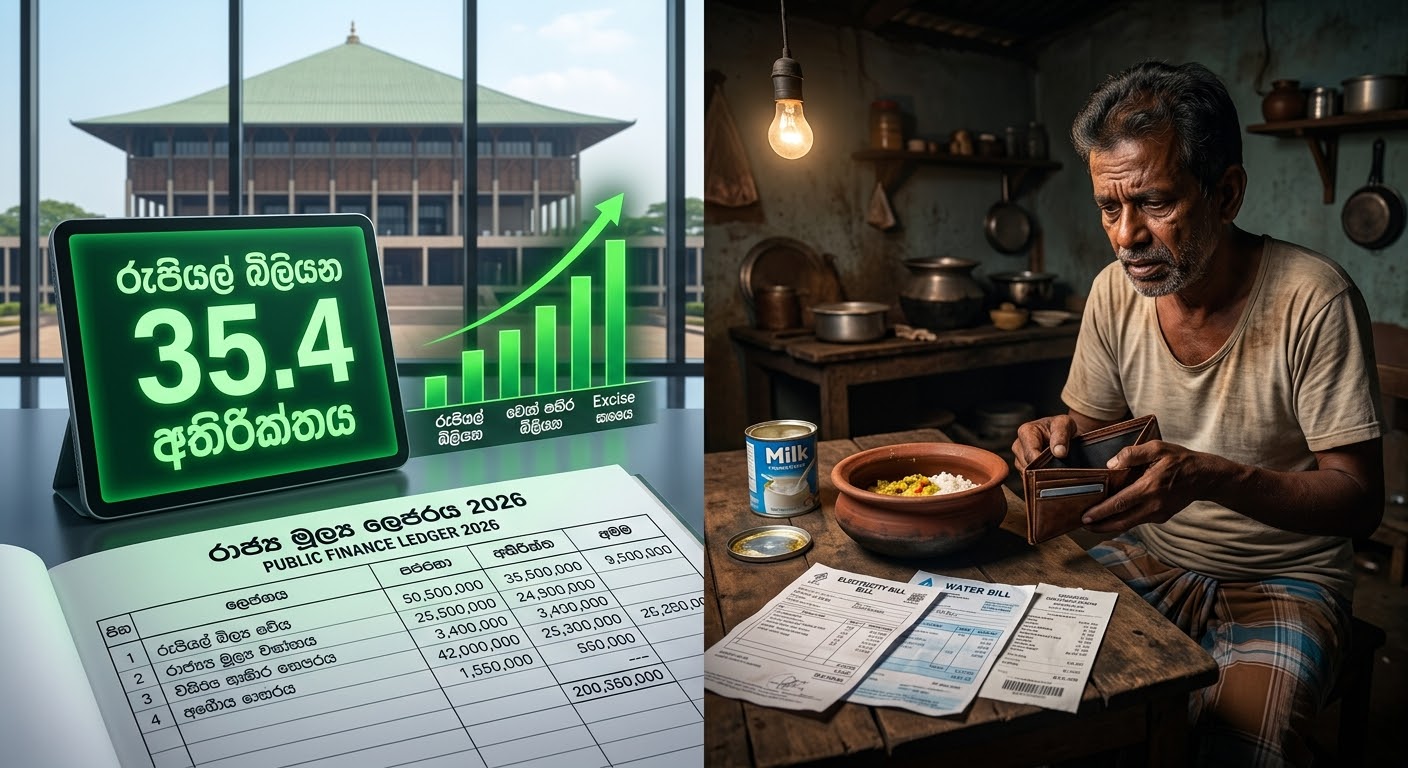
No matter how optimistic the statistics presented regarding economic growth rates, tax revenues, and fiscal targets may be, if an ordinary family cannot cover its basic needs—such as food, housing, electricity, transport, education, and healthcare—from its monthly income, questions regarding the true benefits of that growth will continue to persist.
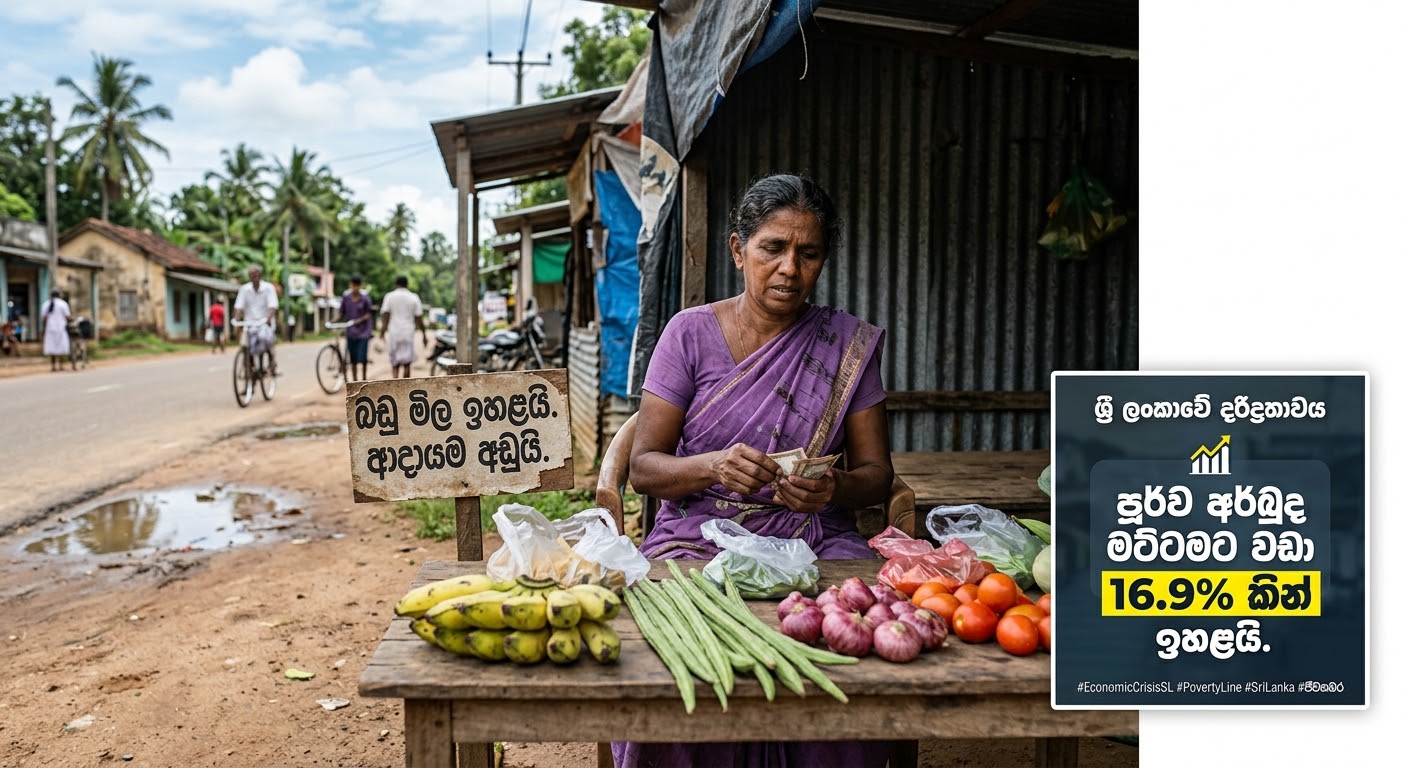
According to World Bank estimates for 2026, Sri Lanka's poverty rate in 2025 was approximately 16.9%. This figure remains significantly higher than the level recorded prior to the economic crisis. Therefore, we must not forget that achieving economic stability and restoring the living standards of the people are not one and the same thing.
What should the people expect from the upcoming budget?.....
01. Real relief for the cost of living!
Families suffering under the burden of essential food items, electricity, transport, and housing costs need practical relief. Targeted support for low-income earners, school meal programs, child nutrition, and social security must be strengthened.
Furthermore, supply chains must be restructured to control rising food prices caused by middlemen, a lack of storage facilities, and high transportation costs. Providing relief to the people is not just about distributing money, but also about reducing their daily expenses.
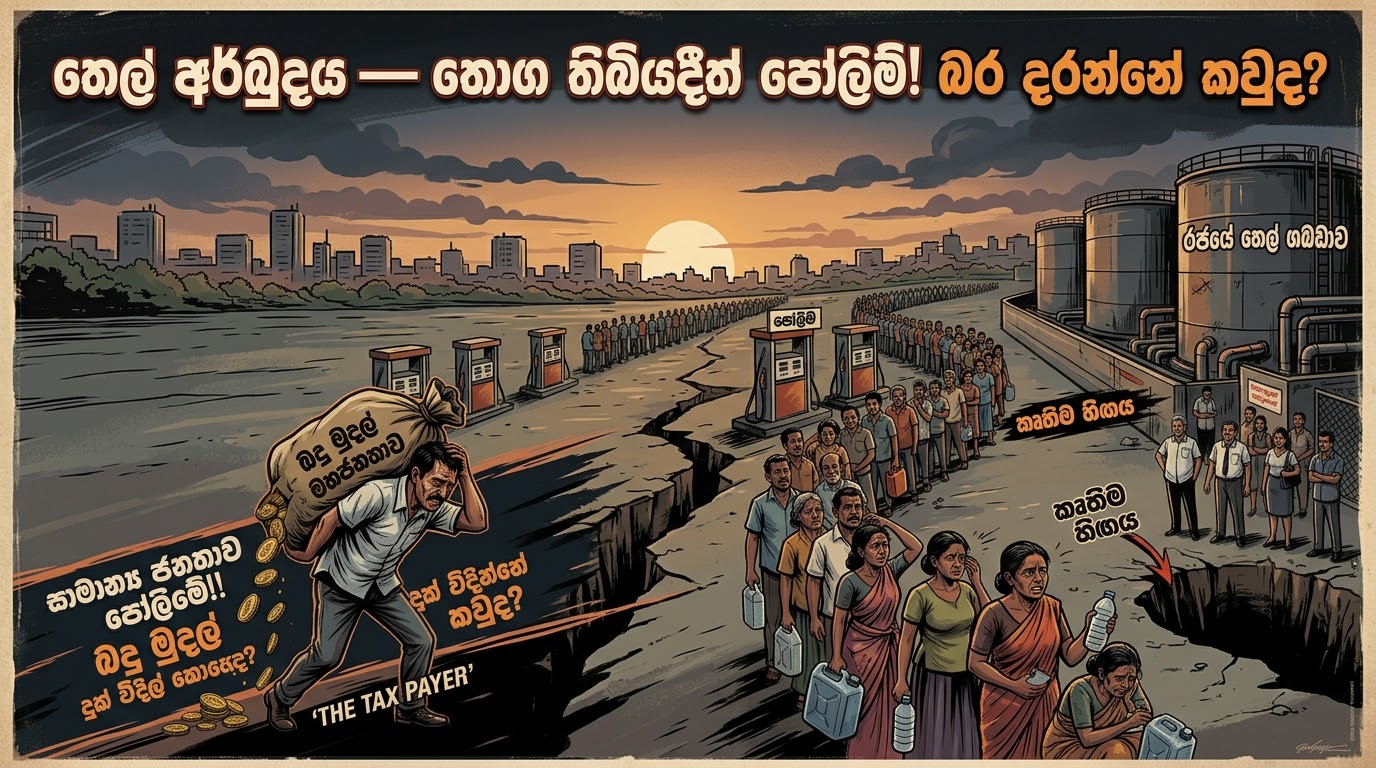
02. Whose shoulders bear the tax burden? It is true that the government needs revenue. However, placing a disproportionate burden on the ordinary people in generating that revenue is unfair.
Indirect taxes paid when purchasing essential goods and services can heavily impact low-income earners. Therefore, it is essential to curb tax evasion, legally collect taxes due from high-income earners and large businesses, review unfair tax concessions, and increase the fairness of the tax system.
Reducing every single tax is not the solution. However, a government that collects taxes from the people must prove that those tax funds are spent efficiently and transparently.
03. Salary disparities, the job crisis, and labor rights!
The budget cannot ignore salary disparities in the public service, delays in promotions, discrepancies in allowances, and youth unemployment.
Issues regarding the transport and operational expenses of field service workers, including development officers, must be resolved. A transparent mechanism is needed to review public sector salaries and allowances.
Jobs for youth are created not through political promises, but through a production-driven economy, vocational training, and new investments. A clear roadmap for this must be presented in the budget.
04. Education and healthcare must not become commodities!
Teacher vacancies in rural schools, a lack of laboratory and technological facilities, the heavy reliance on private tuition classes, and limited opportunities for higher education further reinforce class inequalities among children.
Therefore, it is essential to reduce disparities in resource distribution among schools, strengthen scholarships, and expand vocational education tailored to the labor market.
Funds must also be allocated to minimize medicine shortages in hospitals, doctor and nurse vacancies, and long waiting lists for tests and surgeries. Simultaneously, transparency and accountability in pharmaceutical procurement must be ensured.
05. Protect the farmer while ensuring a fair price for the consumer!
The reality where farmers do not receive a fair price for their harvest while consumers are forced to pay high prices is a deep-seated problem in our agricultural and trade system.
Investments must be made in storage and cold-room facilities, transport infrastructure, crop processing, market information, and direct purchasing mechanisms. The fisheries sector, small-scale farming enterprises, and rural producers require equal attention.
The problem cannot be resolved merely by providing subsidies to farmers. A productive economy must be built that increases farmers' incomes and secures the nation's food security.
06. Does the country have a future without a production economy?
Practical support from the budget is needed to strengthen small and medium enterprises (SMEs), domestic industries, and the export sector.
Businesses must be provided with reasonable credit facilities, technical support, expedited permits, export facilitation, and a stable tax policy.
Instead of exporting tea, coconut, cinnamon, rubber, fisheries, and agricultural products merely as raw materials, the capacity for domestic value addition prior to export must be enhanced. Attention should also be paid to IT and knowledge-based service exports.
The government must clarify whether the income struggles of the people can be resolved through economic growth that neither creates jobs nor boosts domestic production.
07. Loss-making state enterprises and public funds!
When public funds are spent to cover the losses of state institutions, questions must also be raised regarding the inefficiency, unnecessary administrative expenditures, procurement processes, and management issues within those institutions.
Privatizing every loss-making institution is not the solution. However, continuing to use public funds year after year to cover those same losses is equally unsustainable.
Institution-specific reform plans, open tender systems, the implementation of audit recommendations, and public access to expenditure data must be ensured.
08. Combating corruption must not end as a mere slogan!
Merely talking against corruption is not enough. There must be a system where the public can access information regarding state contracts, procurements, project expenditures, and tax concessions.
Action must be taken regarding irregularities exposed in audit reports, and there must be accountability concerning the progress of legal investigations, the recovery of funds, and legal action against those responsible.
Anti-corruption must not be a political campaign slogan, but an active system that protects public funds.
09. Transport, electricity, housing, and social security!
Strengthening public transport to reduce daily commuting costs, reducing inefficiencies in the power grid, investing in renewable energy, and providing targeted relief for vulnerable families must be parts of the budget.
Steps are also needed to ensure that the elderly, persons with disabilities, informal sector workers, and low-income families are not excluded from social security. Providing affordable housing and basic utilities is a related priority.
How will the money be raised?
We must also understand the real constraints faced by the government. Unlimited relief cannot be provided while ignoring state debt, interest payments, and fiscal targets.
However, using this as a justification to place every burden on the public is equally unfair.
Minimizing tax evasion, cutting unproductive expenditures, reviewing inefficient projects, and directing resources toward productive investments are essential. For every new expenditure, its funding source, benefits, and implementation timeline must be clearly stated.
In the end, the people ask only one question!
Whether the government's budget is successful should not be judged merely by attractive words in parliamentary speeches or economic growth figures.
Did the cost of living for the ordinary family decrease? Did the ability to live on a salary increase? Did the youth get a job? Did the farmer's income increase? Did the patient get medicine? Did the child get equal educational opportunities? Did public trust in state expenditure increase?
The government will have to answer such questions.
What the people want is not prosperity portrayed merely through a budget speech, but a tangible change felt in their everyday lives.
Therefore, the upcoming budget of the National People's Power government must be measured not just by the amount of money allocated, but by the problems solved, promises fulfilled, and real benefits delivered to the people.
A budget is not just a manifesto of the government. It should also be a document of accountability through which the people can demand answers from the government.
Sunil Gamini Jayalathge ✍️