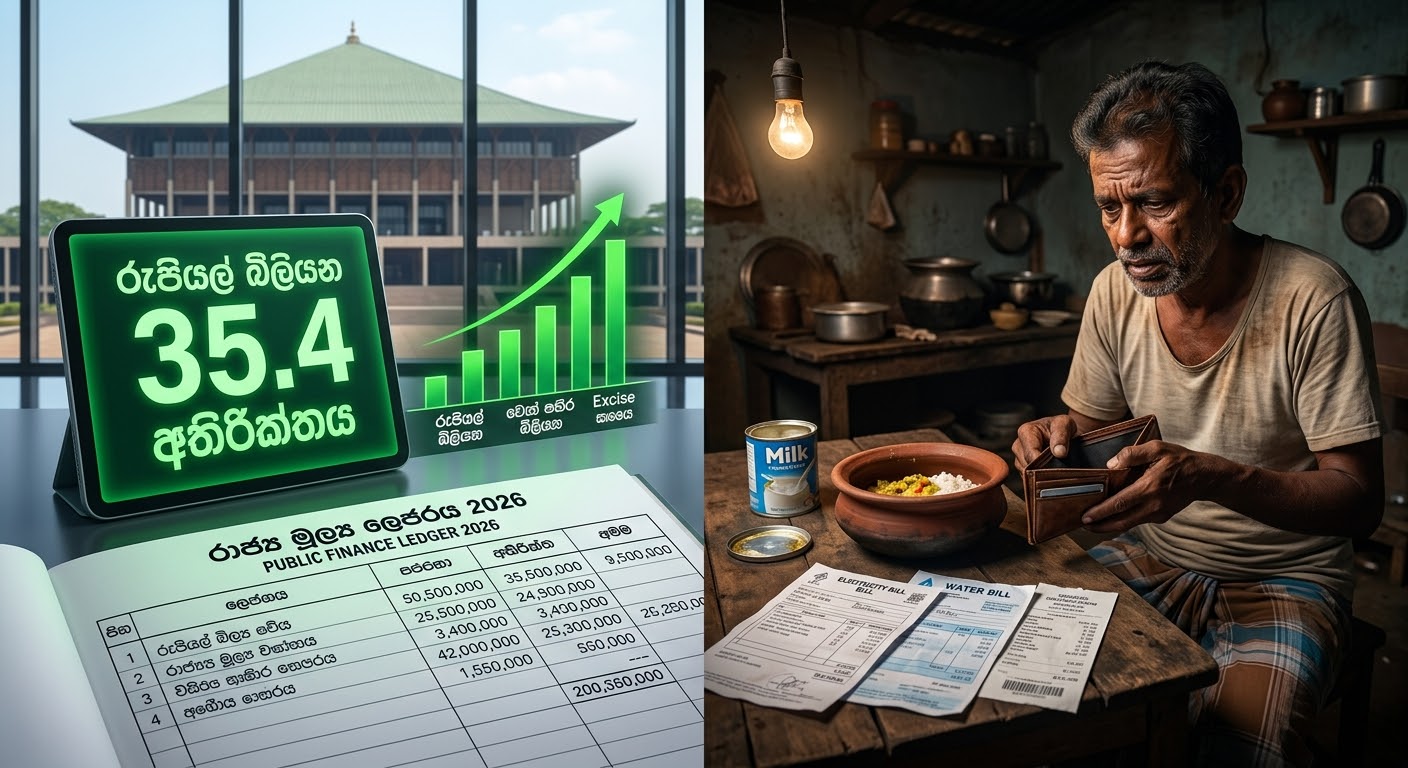
Has the tax burden on the people been reduced?
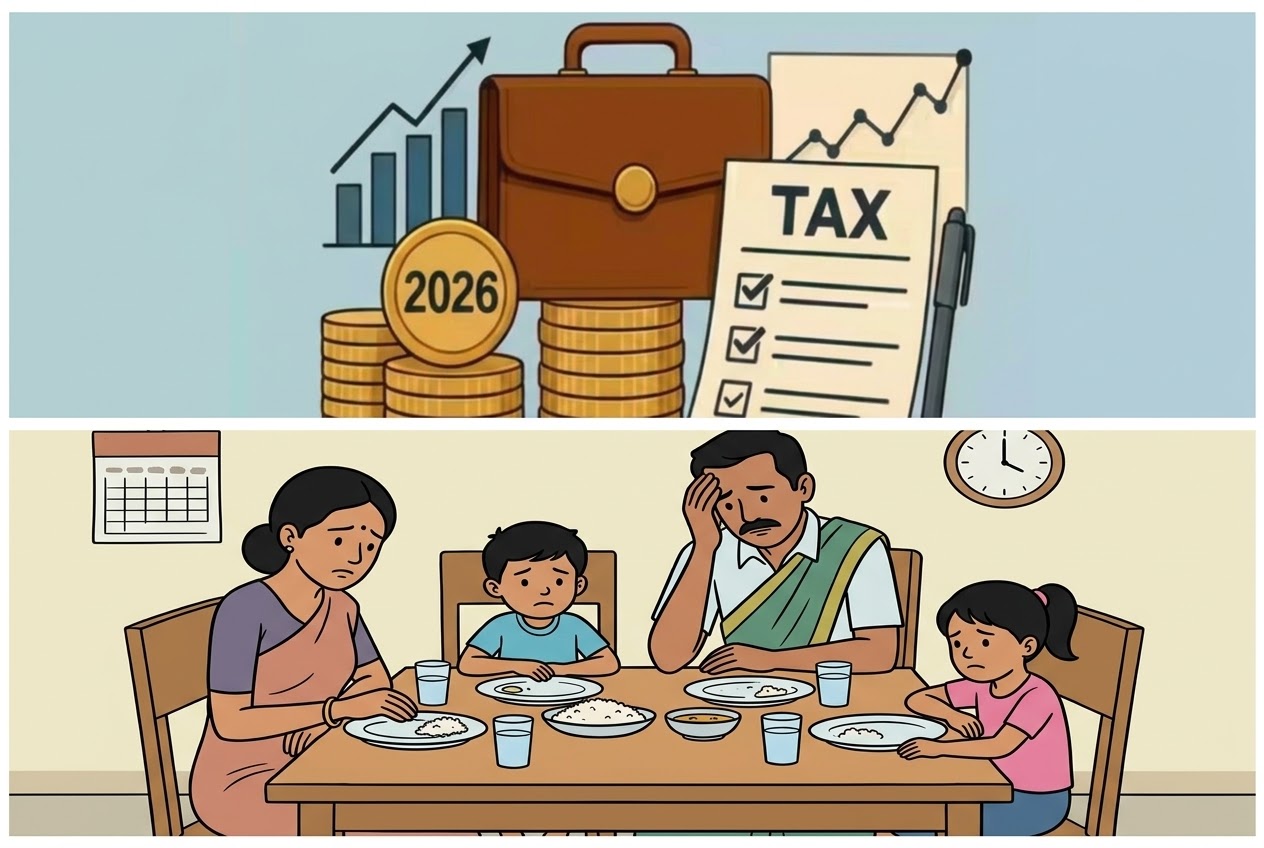
A clear policy in the NPP manifesto presented to the people during the 2024 election campaign was “0% VAT on essential food items”.
It mentioned the introduction of 0% VAT on essential goods including local milk and eggs, infant formula, medicines, school books, stationery and equipment.
But the question that the people should ask today, by September 2026, is very simple. That is, “How much tax relief has the people received today?”
What happened to the Special Commodity Levy (SCL)? ..
The most special point here is the difference between two official documents of the government itself.
On March 25, 2024, the Cabinet decided to abolish the Special Commodity Levy (Special Commodity Levy Act No.48 of 2007). At that time, the government itself stated that the SCL was applicable to 64 commodities and 210 HS Codes.
However, on December 18, 2024, the new cabinet decided not to implement that decision and to maintain the SCL from January 1, 2025.
The government explained that if the SCL were removed, other taxes, especially VAT, would have to be imposed, which could increase the market price of essential goods.
The old decision to provide tax relief to the people was later changed in this way.
More importantly, an order issued on December 31, 2025 maintained the tax rates applicable to 62 commodities under the SCL at the same rates until December 31, 2026.
So what are the people paying today?......
According to the 2026 tax information of Sri Lanka Customs, the SCL is still applicable to a number of commodities.
To take a few examples,
Potatoes – SCL is Rs. 80 per kilo.
Onion – SCL Rs.50 per kg.
Sugar – SCL Rs.50 per kg.
Green beans – SCL Rs.300 per kg.
Peas – SCL Rs.300 per kg.
Salt – SCL Rs.40 per kg.
Such taxes still exist.
It is important to remember that SCL is not the only tax burden on food prices. Depending on the product, VAT, SSCL and other import taxes are also included in the food price in different ways.
How much is this tax burden for an average family?..,.
Assuming that a family of four consumes a certain amount of staple foods such as rice, lentils, sugar, potatoes, onions, coconut oil, fish, green beans, etc. in a month, the SCL tax on a few selected items alone can become a burden of almost Rs.5,000 per month.
But this is not the total tax paid by a family. It should be made clear.
The final consumer price is determined after adding up the import price, SCL, VAT/SSCL if applicable, transportation costs, wholesale costs, retail costs and profits.
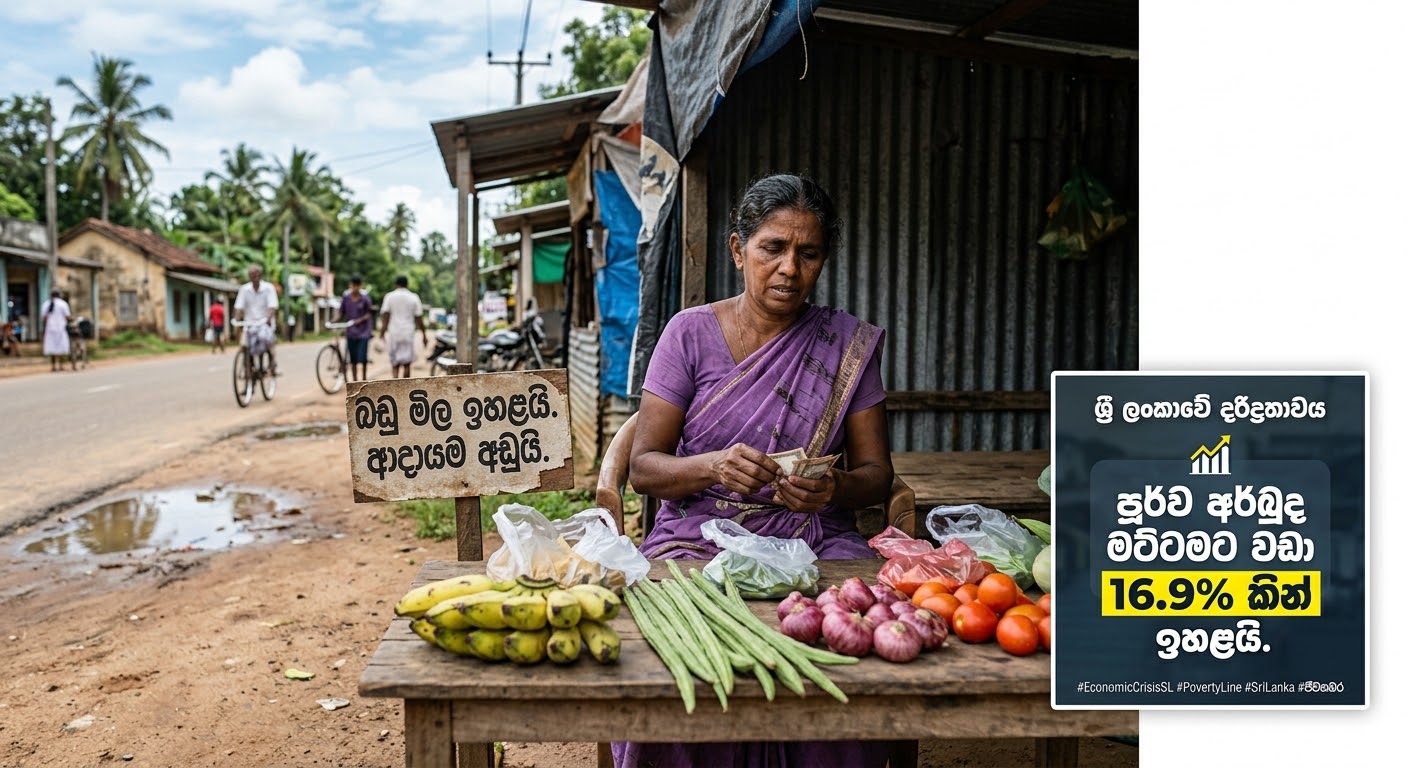
The reality on the people's table...
As of September 25, 2026, the Central Bank's daily price reports are constantly reporting the prices of staple foods.
Accordingly, food prices are still a large part of the monthly expenditure of an average family.
So the question is, how much has the tax policy contributed to reducing the cost of living of the people?
Is it tax removal? Tax change?.....
Another point should be made to do justice to the government. It is not possible to simply state that 'all taxes have not been reduced'.
The government has also decided to phase out the CESS tax in 2026 in phases over a period of four years. It is planned to implement it from 2026 to 2029.
Also, there are already tax concessions/exemptions for certain medicines, baby milk etc.
Therefore, the simple allegation that “the government has not removed any tax” is not correct.
But at the same time, it should be clearly stated that the promise of “0% VAT on essential food” in the policy manifesto has not been implemented as a common system for all essential food items.
The question that the people should ask now is….
It is easy to forget the promises made on the election platform. But once the people have voted on those promises, it is the right of the people to question their results.
Therefore, there are several questions that should be asked of the government today.
01. How much of the promise of 0% VAT on essential food items has been implemented?
02. Why is the SCL tax, which was decided to be abolished in 2024, being reinstated?
03. Why are 62 items still subject to SCL tax by 2026?
04. If it is said that tax concessions were provided, how much has the monthly food expenditure of an average family decreased as a result?
05. How much of the “tax concession” actually went to the people’s table?
Answering these questions is not just criticizing the government. It is demanding accountability for public funds and public taxes.
It is easy to ask for votes from the people in an election. But real accountability is to prove numerically that the promises made to the people have been fulfilled.
Ultimately, what the people need is not another political slogan. A policy that reduces the burden on the table.
Not just a change in the tax code,
but a real change in the cost of living of the people.
No matter who made the promise, accountability must be before the people.
(The key figures and tax facts here are based on the NPP Policy Statement, Cabinet decisions and Sri Lanka Customs' 2026 Tariff Schedule. )
Jayalathge Sunil Gamini ✍️