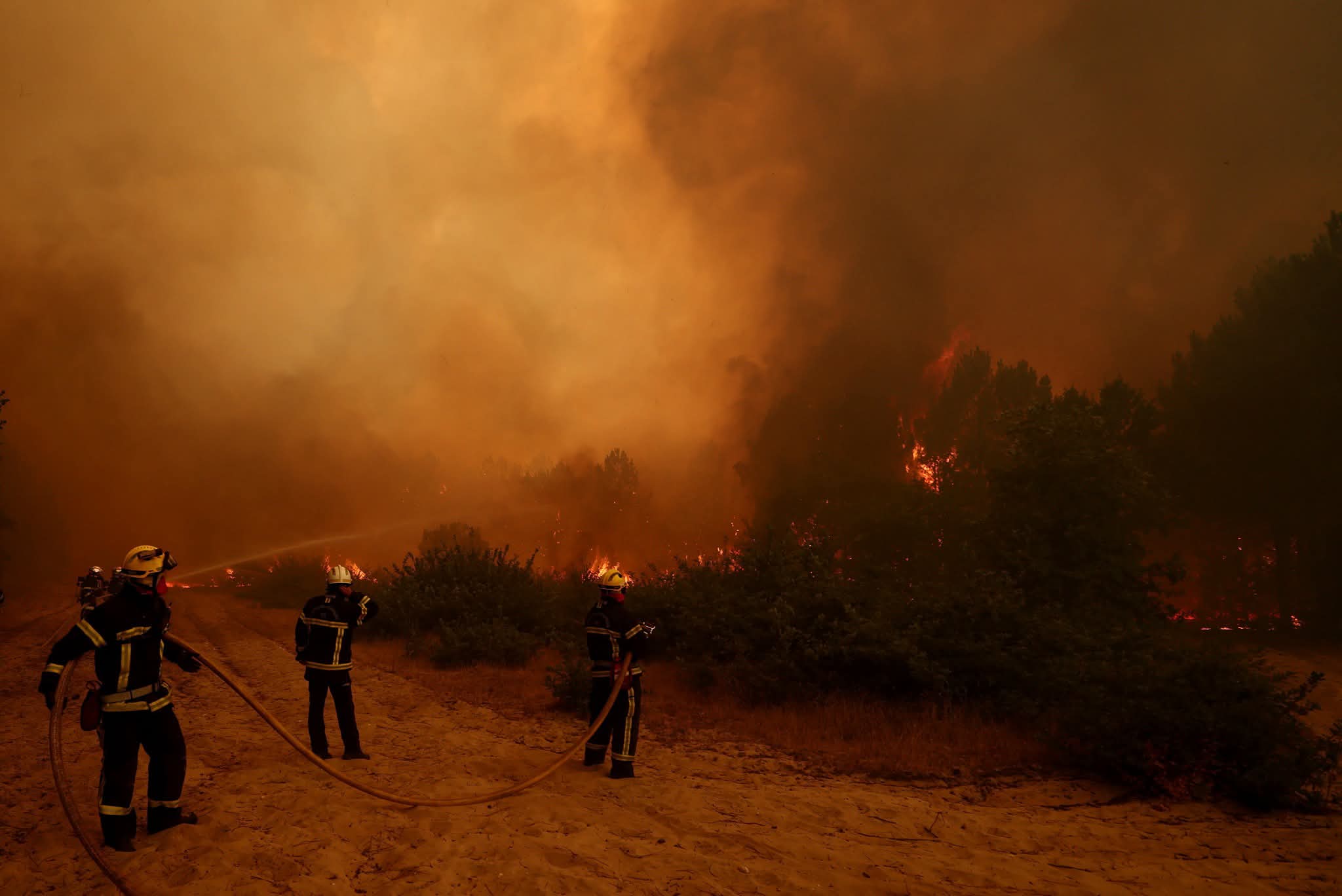
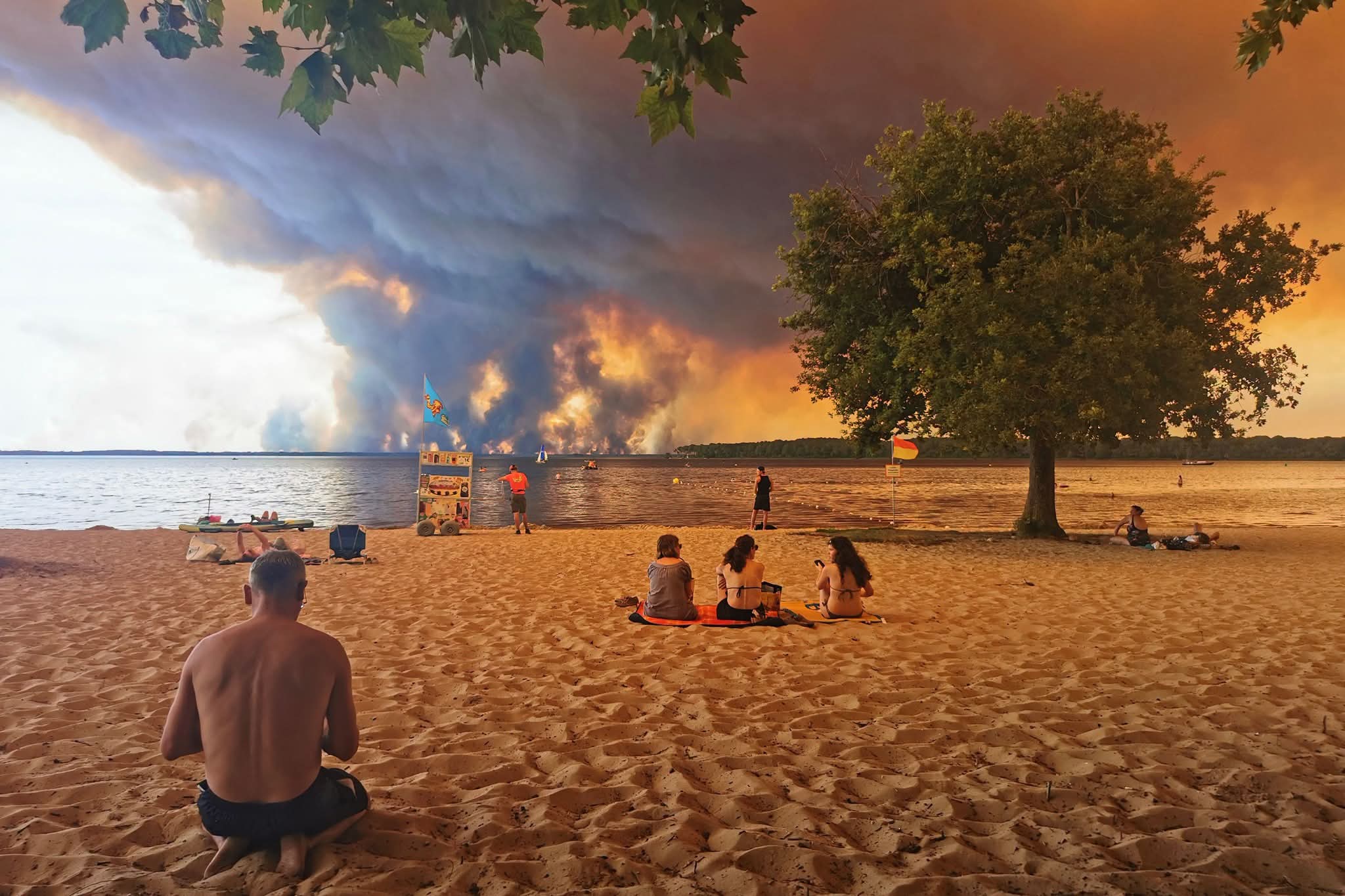
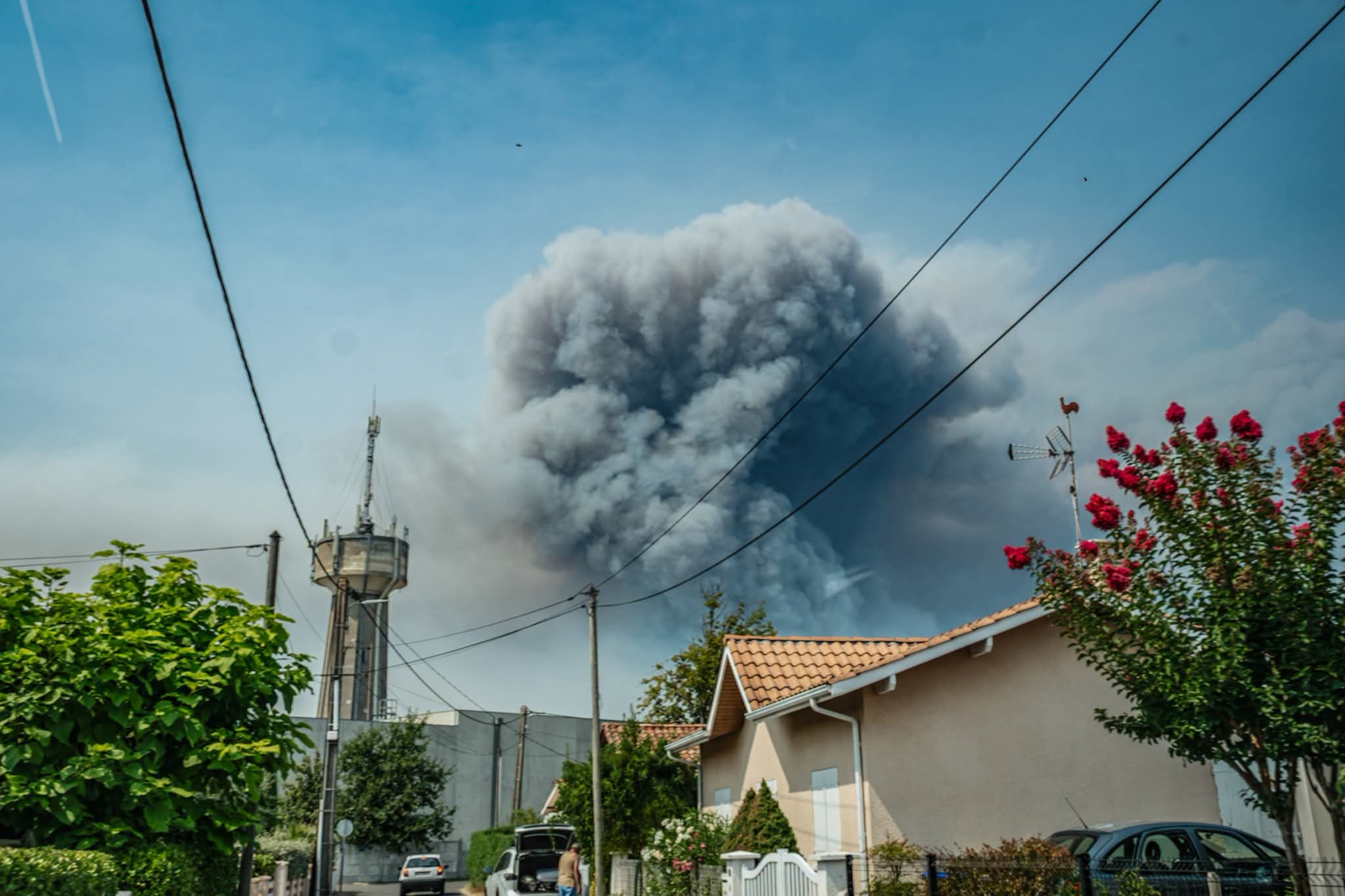
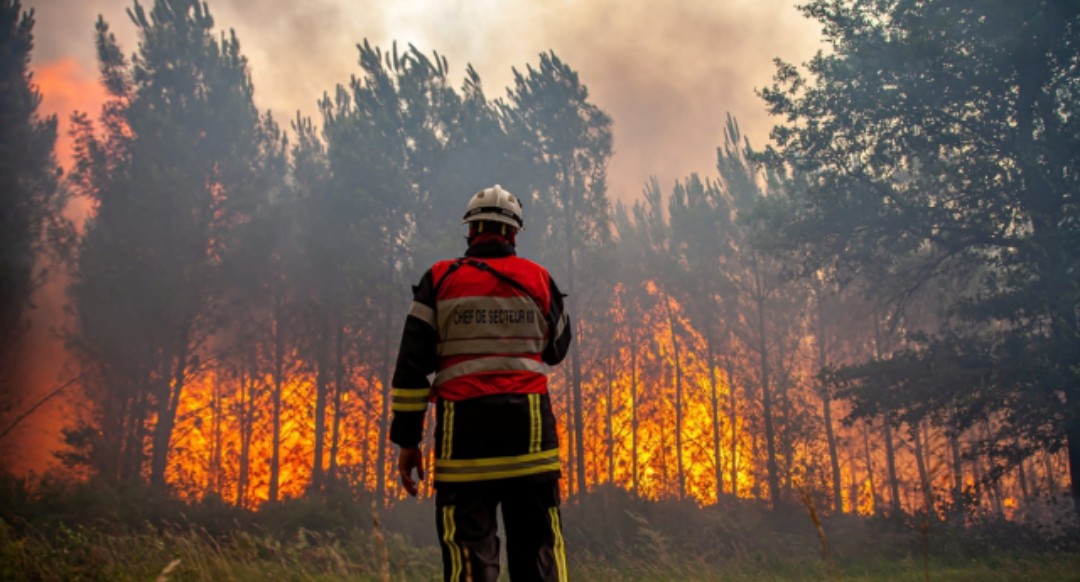
France is currently in the midst of one of the worst environmental crises in recent history, due to extremely hot weather, prolonged drought and strong winds.
These massive wildfires that are spreading across southern and western France have had a severe impact on natural ecosystems, human life and the country's economy.
The areas where the wildfires are spreading the most severely...
The Gironde region has become a major focus of the wildfires. Lège-Cap-Ferret and the surrounding coastal forests have been severely damaged.
The fires are spreading very quickly in the Landes and Var regions, which are one of the largest pine growing regions in Europe, due to the high resin content and dryness of the plants.
These wildfires have been reported in the dry mountainous areas and the Maquis (maquis) of the Tarn and the Mediterranean coastal region.
The total damage so far...
The damage to forests and biodiversity is very high. More than 100,000 hectares have been destroyed so far. According to recent reports, almost 100,000 hectares of forests, natural parks and pine plantations have been completely burned to ashes.
Thousands of animals, including rare reptiles, birds and mammals, that lived in these forests have also been killed in the fires, and the biodiversity of the parks has been severely damaged.
Impact on life and civilians....
More than 167,000 people and tourists have been evacuated to safer places as the fires spread towards cities, resorts and densely populated areas.
Although early warnings prevented major losses of life, many firefighters and civilians have been injured or hospitalized with respiratory problems due to smoke inhalation.
Damage to property, tourism and infrastructure.....
Nearly 100 popular camping sites, holiday resorts and private homes in France have been partially or completely destroyed by the fire.
Several highways and railways had to be closed, and telecommunications and electricity systems were down in many areas.
The immediate measures taken by the French government and security forces.....
Thousands of firefighters, military personnel and volunteers have been deployed full-time. A large number of specialized aircraft, such as Canadair and Dash, which drop water and fire-fighting chemicals from the air, as well as helicopters, are continuously operating.
The French meteorological department (Météo-France) maps the areas at risk of wildfires daily using color codes (Yellow, Orange, Red) and provides various safety advice to the public.
On high-risk days, the public is prohibited from entering forests and parks, and strict restrictions are imposed on outdoor fires, BBQs and smoking.
Government decisions for the future........
The French government is to introduce several new national policies and regulations to control possible wildfires in the future.
Home and building owners must remove dead trees and bushes within 50 meters of their land. Landowners who do not do this will be fined heavily, and the government will clean up the area and recover the cost from the owner.
The government has decided to replace fire-prone pine trees with more fire-resistant broadleaf/deciduous species when replanting trees in the destroyed areas.
Based on the upcoming "National Fire Risk Map", new housing or tourist development in high-risk areas will be suspended or strict conditions will be imposed.
When selling or renting a house or land, it will be mandatory to inform the buyer in writing if the location is located in a fire-prone area.
The ongoing wildfires in France clearly illustrate how serious the threat posed by global warming and climate change is. Protecting the environment, preparing for pre-development plans and preparing for weather crises have now become essential for every country in the world.
Jayalathge Sunil Gamini ✍️

At least 12 people were killed and 309 others injured in an attack on Riyadh International Airport on Saturday, Saudi Arabia’s civil aviation officials said. A diplomatic source blamed Yemen’s Houthi…

The Story Behind Today's Massive Student Protest in Paris On October 6, 2026 (today), thousands of high school students, university students, and education sector workers are scheduled to gather for…

President Donald Trump said today (12) that White House press secretary Caroline Levitt will step down from her position by the end of August. The 28-year-old Levitt is stepping down to spend more tim…

A Saudi Arabian court has sentenced a Sri Lankan youth to 5 years in prison for posting a Facebook post that insulted Islam and the Prophet Muhammad. In addition to the prison sentence, the youth, ide…