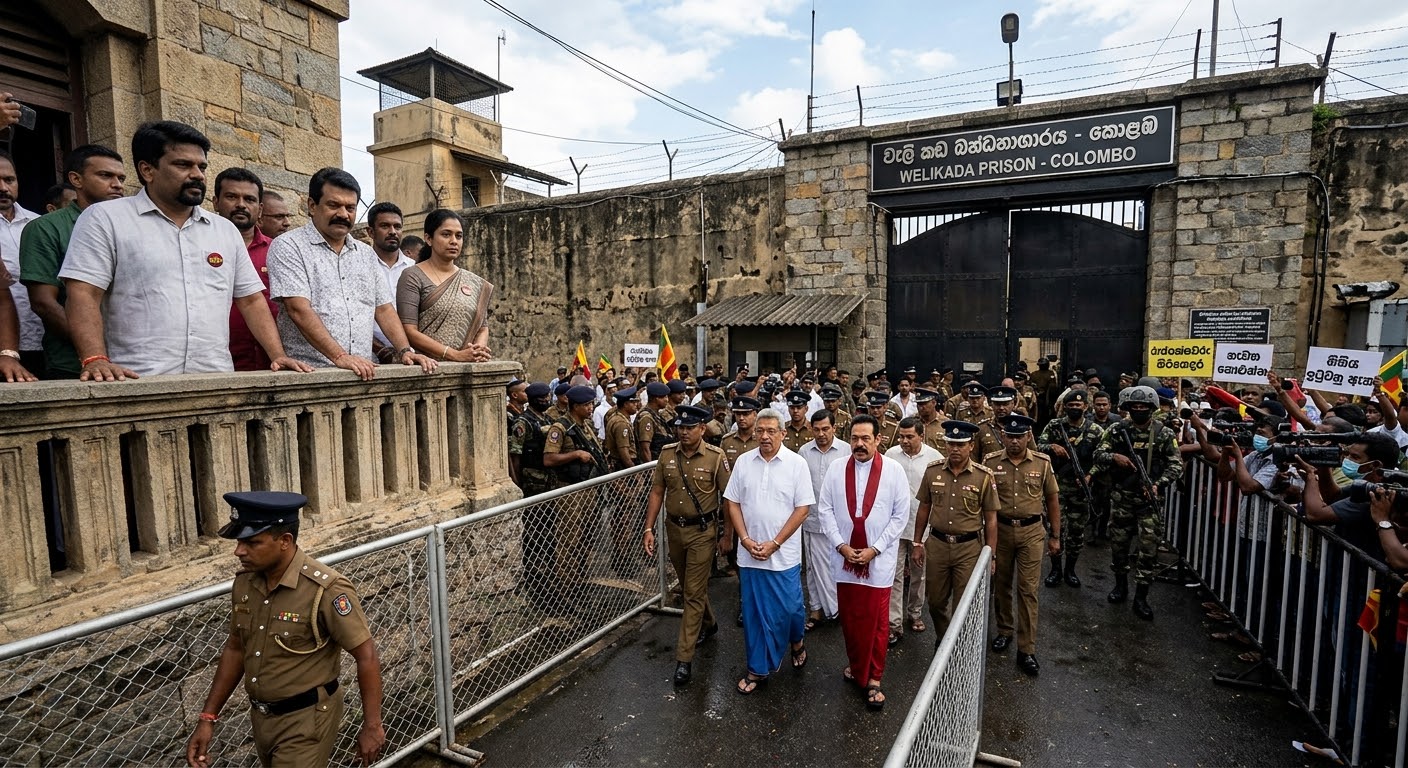
Did the Rajapaksas go to jail because of NPP complaints?
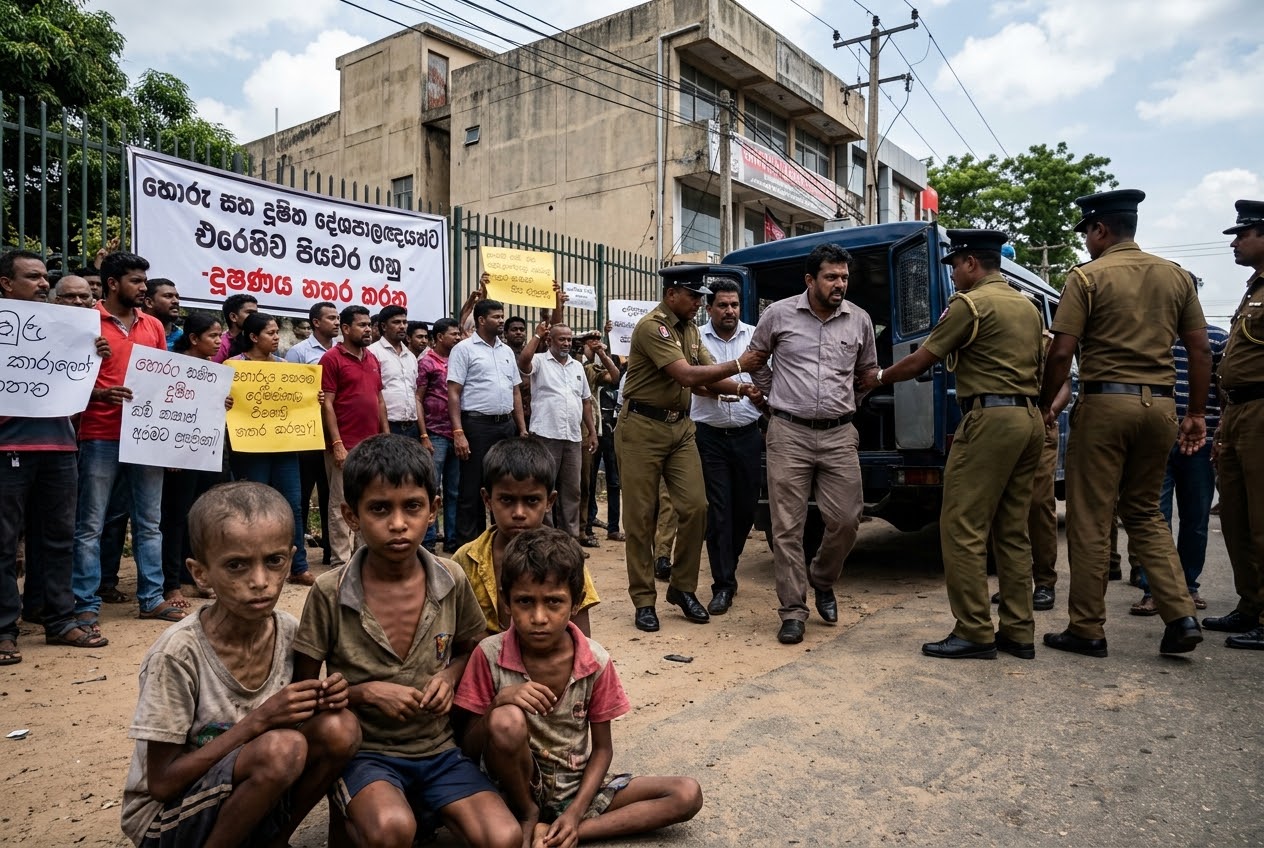
“We came to power to catch thieves. To put the corrupt in jail.” This was one of the main hopes that arose among the people when the NPP government came to power in 2024.
For many years, JVP/NPP leaders raised their voices before the people about the alleged corruption, misuse of public funds, misuse of political power and unsolved crimes that occurred during the Rajapaksa regime.
But today we need to ask a more important question.
Who are the politicians from previous governments who were imprisoned on corruption charges after the NPP came to power in 2024? Who filed the complaints against them? Were those cases newly initiated by the NPP government? Or were they cases that began many years ago?
This is a question that should be investigated not through political propaganda, but through documents and case history.
Mahindananda Aluthgamage and Nalin Fernando....
On May 29, 2025, the Colombo High Court Trial-at-Bar sentenced former Sports Minister Mahindananda Aluthgamage to 20 years rigorous imprisonment, and former Sathosa Chairman and former Trade Minister Nalin Fernando to 25 years rigorous imprisonment.
The charge was that in 2014, 14,000 carrom boards and 11,000 checkers boards were purchased through Sathosa and distributed to schools and sports clubs, causing a loss of more than Rs. 53 million to the government by distributing them to political offices.
This is not a new case that was started in 2024 when the NPP government came to power. The Commission to Investigate Allegations of Bribery or Corruption (CIABOC) had filed this case in 2019. Its initial investigations had taken place even earlier.
There is another important point. Among the individuals who provided information about the scam was Anton Perera, the former accountant of the Sports Development Department. He himself later stated that his complaint was the basis for the initiation of the investigation.
It is also reported that Wasantha Samarasinghe, the convener of the 'Voice Against Corruption' organization affiliated with the JVP, also filed a complaint regarding the incident. It is also reported that in 2015, the Voice Against Corruption filed a complaint against Mahindananda with the Commission for the Investigation of Allegations of Bribery or Corruption (CIABOC).
Accordingly, the simple truth here is this:
Mahindananda and Nalin were not imprisoned because of a new complaint filed by the NPP government in 2024. It was because of an investigation that began many years ago, a case filed in 2019 and finally a court decision in 2025.
S.M. Ranjith case...
On April 2, 2025, former North Central Province Chief Minister S.M. Ranjith Samarakoon and his private secretary Shanthi Chandrasena were both sentenced to 16 years in prison.
The charges against them were that they caused a loss of more than Rs. 2.68 million to the government by providing fuel to the private secretary’s vehicle between 2012 and 2014 and that they influenced public officials.
But this case did not begin under the NPP government. The case was filed by the Commission to Investigate Allegations of Bribery or Corruption in 2021. The indictments were read in 2022 and the trial was still ongoing in 2023.
That is, the prison sentence in 2025 was not due to a new complaint filed by the NPP government, but because of a court decision at the end of an old investigation.
If so, where is the respect for the NPP government?...
Here, justice should be done to the NPP government. Even if there are old cases, it is the government's responsibility to implement the legal machinery to conclude them, to continue the investigations by the Commission to Investigate Allegations of Bribery or Corruption and to re-investigate certain old cases.
That responsibility cannot be shied away from. But the other side is also very important. It is also not fair to show the final verdict in an old case as a political victory of "we have caught a new one and put it in prison".
Taking the Mahindananda-Nalin case as an example, most of the process of complaint/information → investigation → case → court hearing → conviction → imprisonment
had happened before the NPP came to power.
So what is the real question that the people should ask?...
It is not just "How many thieves did the NPP government put in prison?"
There are several more important questions.
1. How many corruption cases were closed before the NPP came to power?
2. How many new cases were filed after the NPP government came to power?
3. How many of those new cases have resulted in a guilty verdict?
4. How much money and assets have been recovered from those who were found by the courts to have stolen public funds?
5. How many of the corruption allegations that the JVP/NPP exposed to the public in 2015, 2019, 2020, 2021, 2022, 2023 and 2024 have yielded final results, two years after the fact?
The people should not be deceived...
If there was corruption during the Rajapaksa regime, it should be punished. It is not because of anti-Rajapaksa politics, but because of the rule of law.
Similarly, if a minister or official of the NPP government committed corruption, the same law should be applied to him.
The country cannot be built with the political culture of “Our thief is not a thief. The thief of the other party is a great thief.”
If Mahindananda or Nalin Fernando were guilty, they should be punished. If S.M. Ranjith Samarakoon was guilty, he should be punished.
Similarly, if there is evidence against someone in power today, he should also receive the same punishment. That is the real “System Change.”
In the end, the sharp question that remains is….
For years, the JVP/NPP told the people, “We know the corruption committed by the Rajapaksa. We know who the thieves are. If we come to power, we will expose them. We will implement the law.”
Today, the NPP is in power. So now, “Who are the thieves you knew?
Where is the evidence you exposed?
How many complaints did you make?
How many of them were prosecuted?
How many were convicted?
How much public money was recovered?”
The people have the right to ask these questions.
It is easy to come to power by claiming to catch thieves.
But the real test is to apply the same law to your political allies, your officials and the powerful in your party.
If the Rajapaksas are corrupt, the law must definitely apply to them.
If someone from the NPP is corrupt, the law must definitely apply to him.
Otherwise, the people will undoubtedly realize that what has changed is the government, not the culture of governance.
Jayalathge Sunil Gamini ✍️