After making promises and assuming power, is the law an obstacle?
Although the government wants to implement some of the promises mentioned in the election manifesto, it seems that a question has now arisen as to whether they can be implemented.
This is not a statement by an opposition politician.
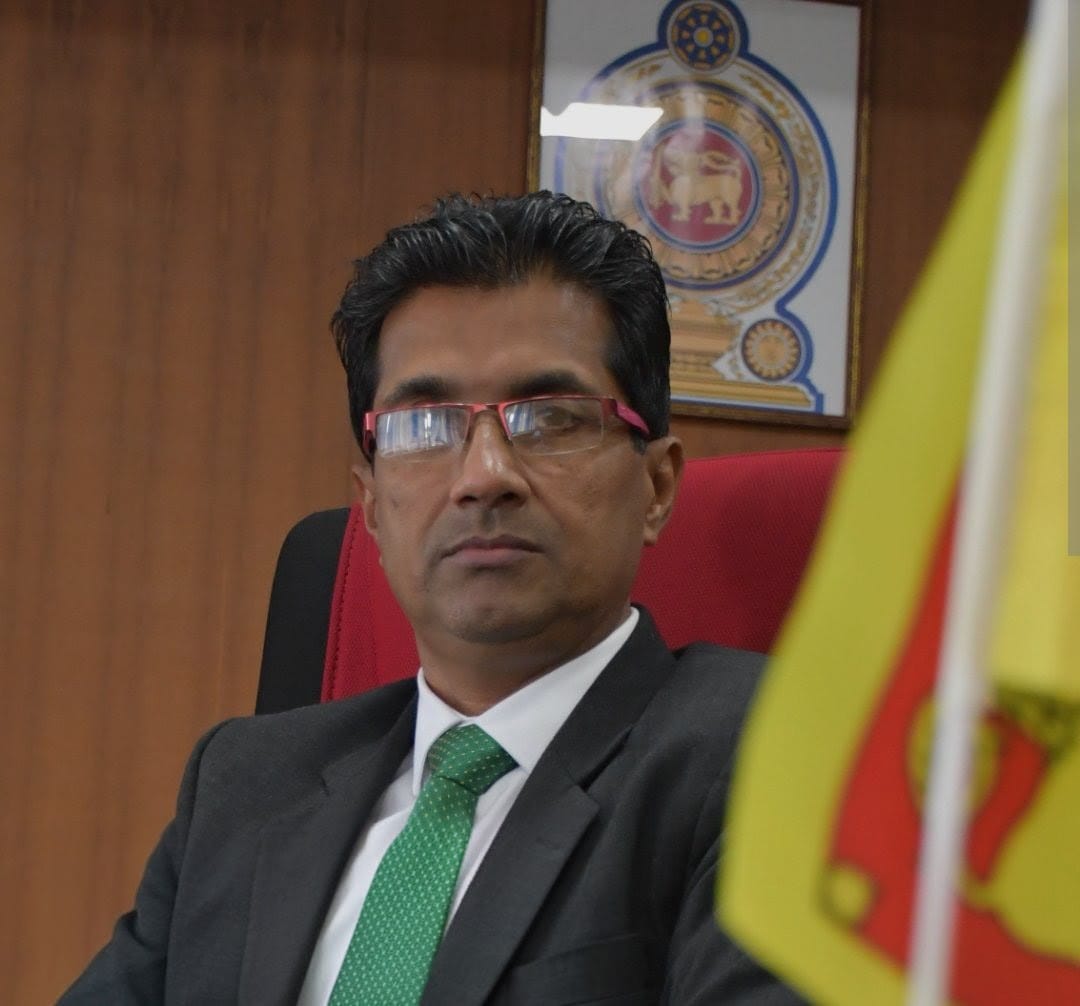
This is a serious issue raised by the Director General of the Commission to Investigate Allegations of Bribery or Corruption, Mr. Ranga Dissanayake, in his statement made at BMICH on the 16th. He specifically mentioned three points in the NPP government's policy manifesto "A Rich Country, a Beautiful Life".
01. Establishment of Anti-Corruption Investigation Offices in every district.
02. Abolition of the Executive Presidency.
03. Establishment of the Public Prosecutor's Office, independent of the Attorney General's Department.
The question of the Director General of the Commission to Investigate Allegations of Bribery or Corruption, Mr. Ranga Dissanayake, was about the legal and institutional limitations in implementing these.
He questioned that an amendment to the Anti-Corruption Act may be required for the District Corruption Investigation Offices, where the powers of the President will be transferred if the Executive Presidency is abolished, and how the Public Prosecutor's Office will be linked to the Attorney General's Department.
Then the question is this.......
Was the National People's Power not aware of these legal and institutional complexities before the election?
Did the people who formulated these policies formulate them without understanding the country's constitution, legal system, the Attorney General's Department, institutions such as the Commission to Investigate Allegations of Bribery or Corruption?
If not, why were the necessary legal and institutional plans not prepared to implement such promises before they were made to the people?
This is a question that the people need answers to today.
The government knew about the prosecutor's offices....
There is another important factor here.
In the National People's Powers policy statement itself, it had proposed the establishment of a Directorate of Public Prosecution and provincial sub-offices independent of the Attorney General's Department.
After that, on May 7, 2025, the Cabinet officially stated that this was a proposal in the current government's election policy statement.
The Cabinet had also approved the appointment of an expert committee under the chairmanship of President's Counsel Yasantha Kodagoda to investigate whether new laws should be made for this or whether existing laws should be amended.
So, today's statement that "there are legal obstacles" raises another question. If so, did you know that there were legal obstacles after the promise was made?
Or did you make the promise knowingly?
The same question about the executive presidency…
Everyone knows that abolishing the executive presidency is not a simple task that can be done with a simple act.
A detailed plan is needed regarding the separation of powers, the new constitutional structure, the powers between the president and the prime minister, the role of parliament and the necessary constitutional process.
But that is not the question.
The question is, if that promise was made to the people even while they were aware of it, where are the specific measures and timetable to implement it after taking power?
In June 2026, the Centre for Policy Alternatives pointed out that although abolishing the executive presidency was a clear election promise of the NPP government, the government had indicated that it was not a priority at that time. The Centre for Policy Alternatives has criticized it for its lack of public accountability.
That criticism should not be understood as the official position of the government, but as an assessment presented by the Centre for Policy Alternatives.
But the question still remains.
What is the current status of the promise made to the people?
Is the people’s vote a blank check?...
In an election, a party presents a manifesto to the people.
The people read it, believe it, and vote according to the program stated in it.
Therefore, after the government comes to power,
“We made promises. But now it is difficult to implement them.”
It is not enough to just say.
The question must be answered.
What is the obstacle?
When was it identified?
Was it known before the election?
If it was known, why was it not explained to the people?
If the law needs to be changed, when will it be changed?
If an institution needs to be established, when will it be established?
If the promise has been abandoned, when will the people be officially told about it?
Without answering such questions, the story cannot be concluded with the sentence “There are legal obstacles.”
A deception? More factors are needed to determine that....
Here, there should be responsibility in the use of words as well.
“The people were deceived” means that the promise was made with the intention of misleading the people, knowing that it would not be possible to fulfill it.
Such an intention cannot be confirmed by the information available at this time. But that does not end the issue of political accountability.
Instead, the more serious question that the National People’s Powers should ask the government is this,
When you asked the people for a mandate, did you have the legal and institutional plan to implement what you promised?
If the answer is “no”, then it is a question of how the policies were formulated.
If the answer is “yes”, then it is a question of why that plan is not being implemented.
What the people want is not excuses, but a timetable.....
It is true that the government has at least taken action regarding the Prosecutor’s Office. That is, an expert committee has been appointed. But the Centre for Policy Alternatives has stated that there are still questions about its progress by 2026.
Also, according to a report in July 2026, it was reported that the appointment of the proposed Special Parliamentary Ombudsman to investigate complaints related to the Attorney General had also been delayed until recommendations were received on the establishment of the Public Prosecutor’s Office.
Therefore, what should be before the people now is not more promises. It is action.
It is a timetable. Accountability.
The question is very simple....
timetable. If you are changing the promise, say so openly.
If you do not do so, and leave the mandate obtained by the people's vote behind by saying "we cannot", it becomes a serious issue of democratic accountability.
The people do not vote for empty promises.
The people vote with the belief that the promised change will be implemented.
Therefore, the only thing the people should ask the government today is,
Not "When was the promise made?" but "When will it be fulfilled?"
Jayalathge Sunil Gamini ✍️