The Social Justice Gap Revealed by the Budget!
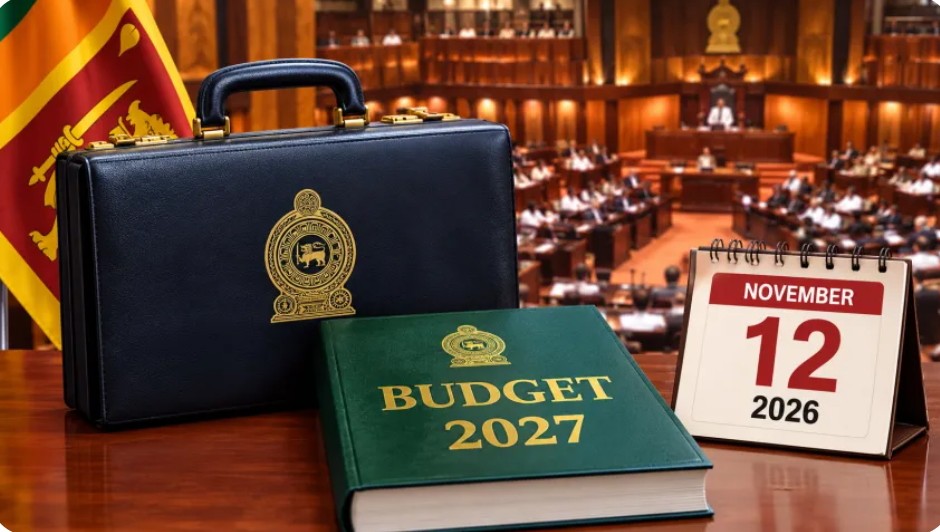
The Government Says It Has Stabilised the Economy. But Has It Managed to Stabilise People's Lives?
The National People's Power (NPP) did not come to power merely to change the government. It came to power promising the people that it would transform the political, economic and social system that had been maintained in this country for decades.
Ending corruption, reducing the unfair tax burden imposed on ordinary people, eradicating poverty, narrowing income inequality, strengthening education and healthcare, and building a fairer society were among the key promises of that political mandate.
Yet today, following the presentation of the 2027 Budget to Parliament, we are once again compelled to ask the same question:
Does this Budget reflect the system change that was promised to the people?
The Economy Is Growing, but Poverty Remains High!
According to the World Bank's 2026 estimates, Sri Lanka's poverty rate stood at 16.9% in 2025. It is projected to decline to 15.8% in 2026.
The country has still not managed to return to the 11.5% poverty level recorded in 2019.
There is no denying that the economy is growing. However, a serious question remains: to what extent have the benefits of that growth reached the poorest sections of society?
Reducing poverty is not simply a matter of maintaining welfare programmes such as Aswesuma. It also requires creating an economic environment in which people have secure employment, adequate incomes, fair wages and the ability to meet the cost of living.
How adequate are the solutions presented in the 2027 Budget to address this challenge?
Is the Government Eradicating Poverty, or Simply Providing Allowances to the Poor?
The allocation of Rs. 230 billion for social protection in the Budget is a positive development.
The allocation of Rs. 25 billion for the Praja Shakthi rural development programme, along with additional funding to economically empower selected families, is also important.
The increase in allowances provided to kidney patients and persons with disabilities should also be recognised.
However, the question we must ask is whether these measures form part of a comprehensive national strategy to eradicate poverty.
How will families that currently depend on welfare assistance become financially independent and generate their own income?
How will rural youth gain access to employment?
How will the incomes and living standards of people in the plantation sector be improved?
How will women achieve economic independence?
Without clear answers to these questions, increasing welfare payments alone cannot create social justice.
Is There Any Solution to the Tax Burden on Essential Food Items?
This is one of the most important issues that deserves attention in the Budget.
The President has presented arguments about the possible economic consequences of granting tax relief on several essential consumer goods, including rice, dhal, onions and milk powder, while rejecting proposals to remove taxes on these items.
The Budget has also proposed increasing the Special Commodity Levy on imported sugar by Rs. 10 per kilogram.
We recognise that the government needs tax revenue. But should the burden of maintaining that revenue fall primarily on the food budgets of low-income families?
If tax relief cannot be granted on essential food items, what direct food assistance will be provided to low-income families as an alternative?
Is making even people's basic food requirements entirely dependent on market prices the new model of social justice?
Is the Middle Class Also Being Offered Only Limited Relief?
Increasing the income tax-free threshold from Rs. 150,000 to Rs. 162,500 offers some relief. However, the economic crisis facing the middle class has not been caused by income tax alone.
A large number of families are struggling to save anything from their salaries in the face of rent, electricity bills, transport costs, children's education, medicines and food prices.
To provide meaningful relief to these families, the country needs real wage increases, affordable essential services and a fairer system of indirect taxation.
A modest increase in the income tax-free threshold alone is not an answer to the economic problems of the middle class.
There Is a Rs. 2 Trillion Investment. But Who Will Benefit?
The allocation of Rs. 2 trillion for public investment in the 2027 Budget deserves particular attention.
Proposals have been made to invest in financing facilities for small and medium-sized enterprises, housing development, transport and infrastructure, education and healthcare. These are important areas for the country's long-term development.
However, the real questions are these:
How many jobs will these investments create? Will those jobs provide adequate wages? Will the benefits reach rural and disadvantaged areas? Will small businesses genuinely have access to these opportunities?
Investing Rs. 2 trillion is not, in itself, a measure of success. Success must be measured by the difference that this investment makes in people's lives.
The Conflict Between a Debt-Repayment Economy and Public Relief
The total government expenditure in the 2027 Budget is approximately Rs. 9.92 trillion.
An amount of Rs. 2,643 billion has been allocated solely for interest payments on government debt.
The government also expects to increase tax revenue to Rs. 5,687 billion.
These figures make it clear that the government's economic policy continues to be based on strict fiscal discipline and debt management.
We recognise the need to repay debt and maintain public financial stability.
But if the burden of doing so falls disproportionately on ordinary people, where is the social justice in these economic reforms?
The government must be much clearer about fairness in tax collection, how the tax burden is distributed between the wealthy and the poor, and the priorities guiding public expenditure.
When the JVP, Once in Opposition, Is Now in Government...
From political platforms in the past, the JVP criticised an economic system that placed the tax burden on the poor, granted privileges to the wealthy, wasted public resources and disregarded the living conditions of ordinary people.
Today, a government led by that very political movement is governing the country. Therefore, questioning the present government is not merely an act of political opposition. It is a demand for accountability for the promises made to the people.
We acknowledge the constraints arising from the IMF programme, public debt, foreign reserves and the need to maintain economic stability. But when the movement sought political power, was it not expected to explain these constraints to the people and find fair solutions to overcome them?
If so, answering the questions being raised by the public today is the government's responsibility.
Ultimately, This Is What We Ask!
The 2027 Budget contains investments, welfare assistance, tax reforms and development proposals.
However, the extent to which these measures constitute a strong and effective programme that provides genuine relief to ordinary people, creates opportunities to escape poverty, reduces income inequality and guarantees social justice remains open to serious debate.
System change does not mean simply changing the names of those who govern. It means changing people's lives.
If a political movement that once spoke about socialism comes to power and then justifies the economic pressures imposed by the market, the people have every right to question the gap between its political philosophy and its actual economic policies.
The success of a government's economic programme should not be measured solely by how much debt it has repaid. It should also be measured by the number of families lifted out of poverty, the quality of jobs created, the money people are able to save, and the educational and healthcare opportunities made available to their children.
The people did not ask for a new ruling class. They asked for a new socio-economic system!
It is the people who have the right to decide whether that promise has been fulfilled.
Jayalathge Sunil Gamini ✍️