The Real Secret Behind the Rs. 22.3 Billion Budget Surplus
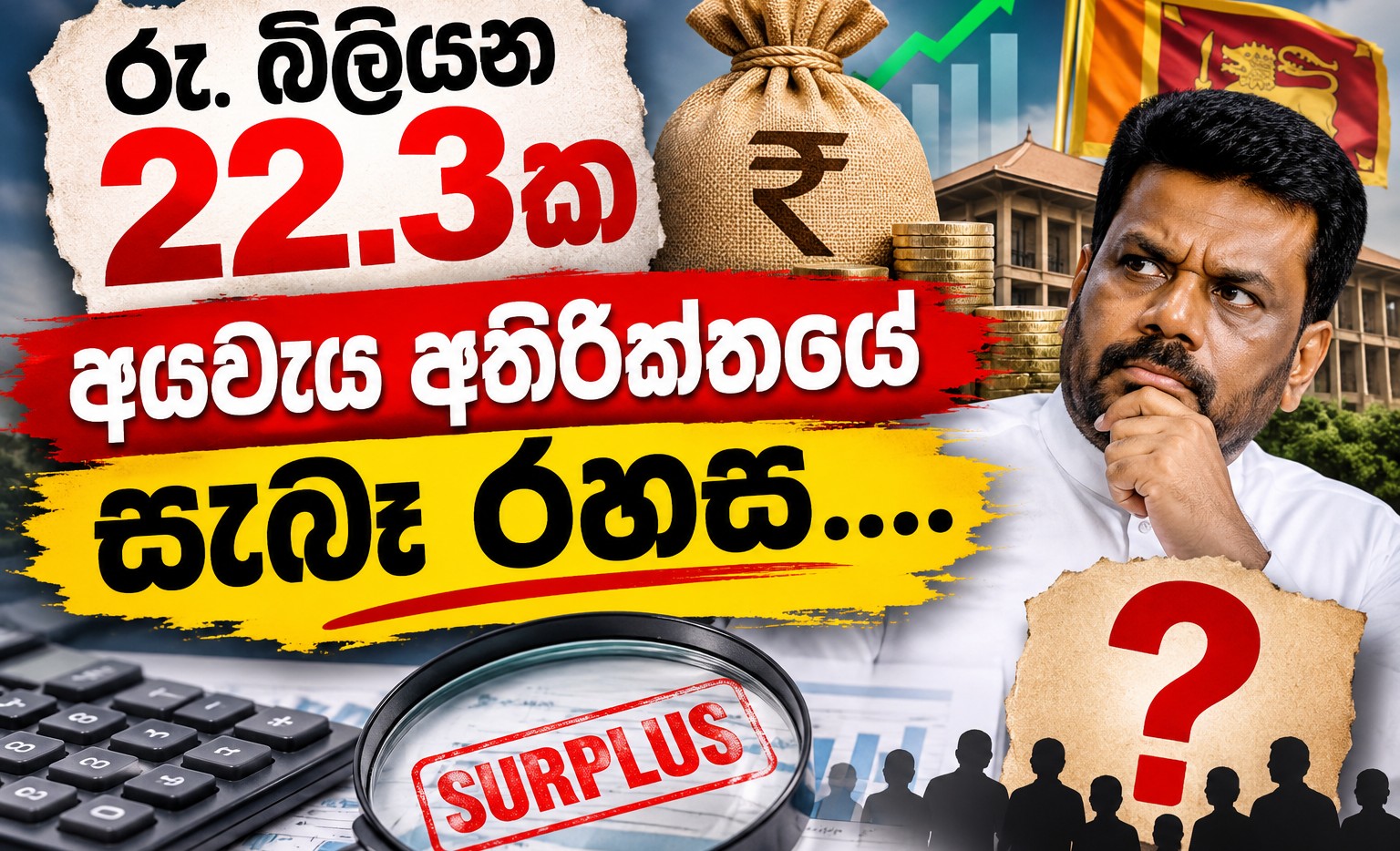
The current government has reported a budget surplus of Rs. 22.3 billion during the first nine months of 2026. At first glance, this may appear to be a sign that the country's economy is moving in a positive direction.
However, it is essential to examine the economic reality behind these figures.
First of all, this Rs. 22.3 billion is not a stockpile of money accumulated in the Treasury since the government came to power. It is simply the difference between government revenue and expenditure during the period from January to September 2026.
During the same period in 2025, the government recorded a budget deficit of Rs. 441.4 billion. By 2026, this had turned into a surplus of Rs. 22.3 billion.
Accordingly, the improvement in the government's fiscal balance over the year amounts to Rs. 463.7 billion.
But how did this change come about?
On the one hand, tax revenue has increased, including revenue from VAT, income tax and import duties. On the other hand, a substantial portion of the funds allocated for development activities has not been spent.
Of the Rs. 1,719 billion allocated for capital expenditure in 2026, only Rs. 542.8 billion had been spent by the end of September. In other words, approximately 68.4% of the allocated funds remained unspent.
So, has this surplus been achieved solely through increased production, investment and rising public incomes? Or is it also the result of collecting more tax revenue from the people while failing to spend even the funds allocated for development?
The government must provide a clear answer to this question.
Having a budget surplus is a positive development. However, a country's economic success cannot be measured merely by figures in the Treasury accounts. It must also be measured by whether the cost of living has come down, whether employment opportunities have increased,
whether healthcare and education services have been strengthened, and whether development projects have actually been implemented.
There is another important fact the government must not overlook.
The 2026 Budget itself projects a budget deficit of Rs. 2,257 billion by the end of the year. Therefore, portraying a nine-month surplus as an overall economic achievement for the entire year is political propaganda rather than a complete economic analysis.
What the people need is not a surplus that exists only in budget books. They need economic relief that they can actually feel in their daily lives.
No government can bring about an economic transformation merely by boasting about a budget surplus while failing to ensure fairness for taxpayers and neglecting to properly utilise the funds allocated for development.
The question is not whether there is a surplus. The real question is: At whose expense was this surplus achieved, and who stands to benefit from it?
The government must provide the public with clear and substantive answers to these questions.
Jayalathge Sunil Gamini ✍️