Breaking newsInternational
Lula’s Victory and the Left-Wing Challenge!
By Admin
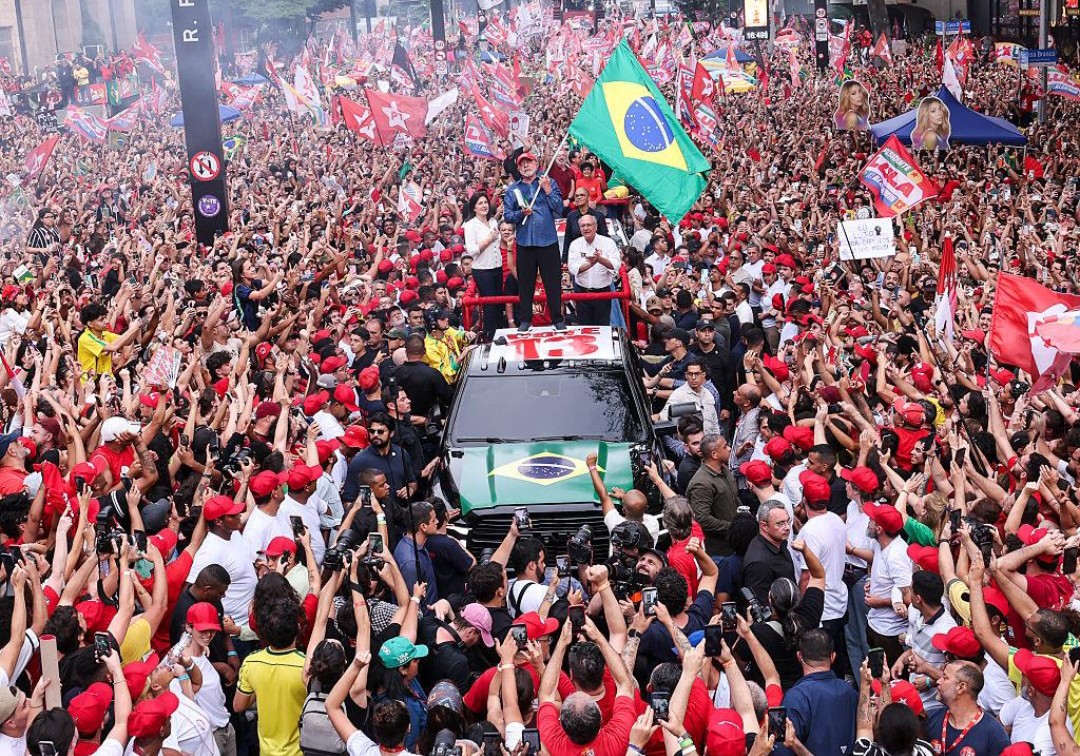
From the Working Class to the Presidential Palace… Through Defeat, Imprisonment, and Political Crises, Lula da Silva Has Secured Another Mandate.
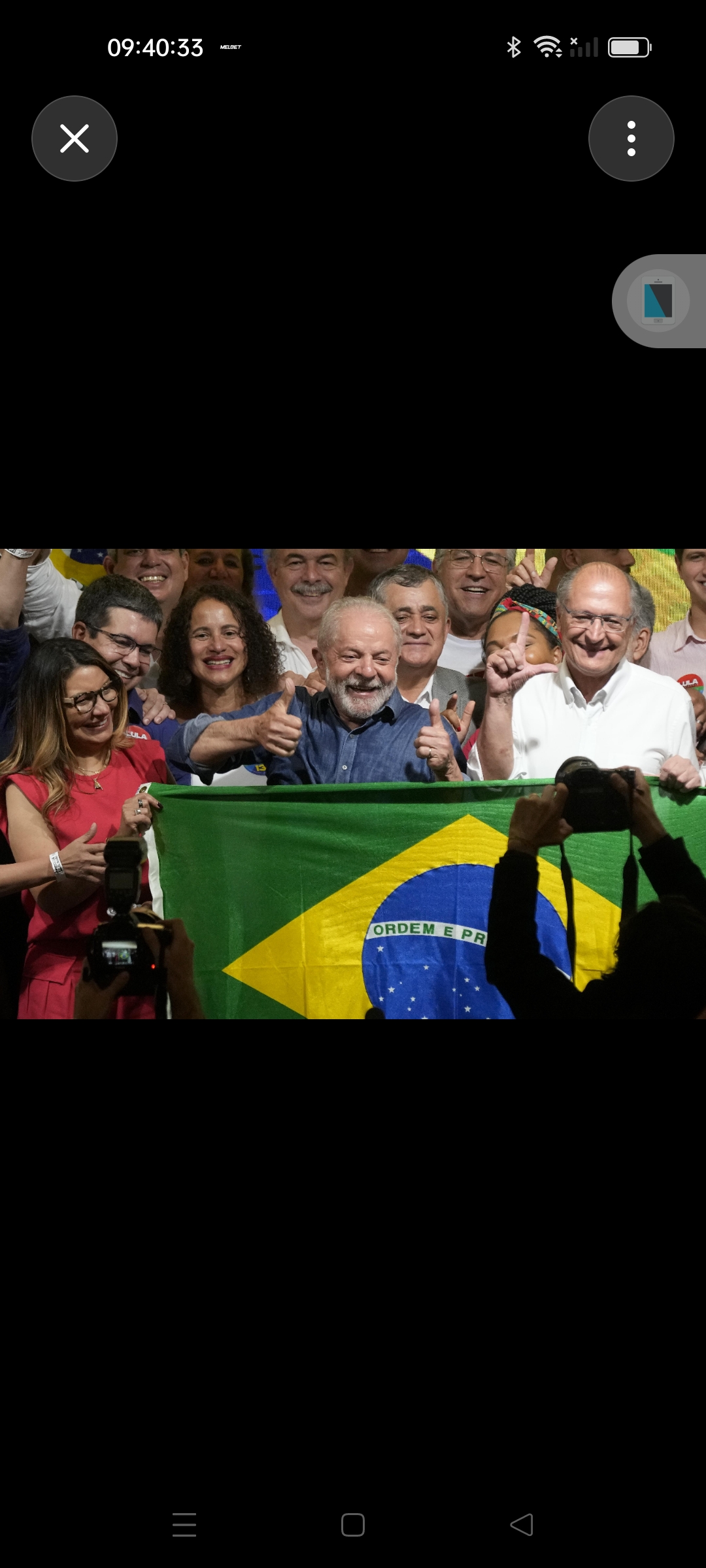
Brazil’s presidential election result has attracted worldwide political attention. In the second round of voting held on October 25, 2026, Luiz Inácio Lula da Silva defeated Flávio Bolsonaro, securing 51.79% of the vote.
His opponent received 48.21%. Accordingly, Lula achieved the historic victory of being elected President of Brazil for a fourth time. This does not represent four consecutive terms, but rather victories across separate presidential terms.
What makes this victory particularly significant is that Lula, who had been trailing in the first round, moved decisively ahead in the second round. It is also the story of an eighty-year-old leader who entered politics through working-class trade union struggles and secured another popular mandate by defeating a younger right-wing opponent.
From a Worker to a President
To understand Lula’s political journey, we cannot ignore his working-class background.
Born into a family struggling with poverty, he experienced the hardships of life from an early age. After working as a metalworker, he became a prominent leader in the trade union movement. He also played a significant role in building Brazil’s Workers’ Party (PT).
First elected president in 2003, Lula governed Brazil from 2003 to 2010. He subsequently faced political crises, corruption allegations, and imprisonment. His life took a new turn in 2021, when the Supreme Court annulled the rulings in the cases against him. In 2022, he returned to the presidency.
The 2026 victory marks another remarkable chapter in his political comeback.
However, it would be insufficient to interpret this simply as the victory of an individual. It is also an expression of the class, economic, and political conflicts that persist within Brazilian society.
Why Are Left-Wing and Progressive Forces Around the World Inspired by This Victory?
1. The Question of Poor People and the Working Class
Lula’s political background is closely linked to workers’ struggles. His administrations have advanced financial assistance for poor families, increases in the minimum wage, and social protection programmes.
In particular, programmes such as Bolsa Família have supported low-income families. Improvements in the labour market and increases in the real minimum wage have also contributed to poverty reduction.
However, this does not mean that all of Brazil’s social problems have been resolved. Income inequality and the concentration of wealth remain major challenges.
Therefore, the expectations of those who see hope in Lula’s victory go beyond taking pride in his past. They expect him to bring about tangible improvements in the lives of poor people in the years ahead.
2. A Challenge to Right-Wing Politics
Today, nationalist, anti-immigration, and right-wing political movements are gaining strength in many countries. Latin America is no exception to this political struggle.
Flávio Bolsonaro, Lula’s opponent in Brazil, is the son of former President Jair Bolsonaro. The political camp he represents holds different positions from Lula’s Workers’ Party on economic policy, social values, the role of the state, and institutional power.
Consequently, some left-wing and progressive groups interpret this result as a political signal challenging the global right-wing tide.
However, Brazil’s political divisions have not ended. Lula’s victory does not mean that all right-wing forces have been defeated. Right-wing and centrist forces continue to exert considerable influence in Parliament, making the implementation of future policies a significant challenge.
3. The Amazon Rainforest and the Planet’s Environmental Future
Brazil’s political decisions do not affect only its own people. Protecting the Amazon rainforest, the world’s largest tropical rainforest system, is directly connected to the global climate future.
Lula’s administration has taken measures to reduce deforestation and strengthen environmental protection. Consequently, organisations working to combat climate change have placed their hopes in his victory.
Nevertheless, it is essential to distinguish political declarations from actual results. The government’s real success will depend on its decisions regarding deforestation, mining, agricultural expansion, and the land rights of Indigenous peoples.
4. National Independence and the International Balance of Power
Lula’s foreign policy emphasises maintaining an independent international role for Brazil, developing trade relations with countries including China, and playing an active role in cooperative frameworks such as BRICS.
This represents Brazil’s attempt to protect its own economic and political interests while maintaining relations with powerful countries, including the United States.
This approach matters to those who believe that global power should not be concentrated in the hands of a single country or a small group of nations.
However, national independence does not simply mean speaking out against foreign powers. It also means strengthening the country’s productive economy, managing resources fairly, improving people’s living standards, and developing the capacity to make independent decisions.
5. Democracy and the Will of the People
In the first round of Brazil’s presidential election, Lula finished in second place. However, in the second round, he defeated his opponent and secured victory.
This represents a significant turning point in Brazil’s electoral history. It demonstrates that the first-round result does not determine the final outcome of an election and that voters can change their decisions in the second round.
However, the political debate has not ended, as Flávio Bolsonaro has called for the election to be annulled. In this situation, the important consideration is not merely political allegations or public statements, but an assessment of the result based on evidence, legal procedures, and decisions made by independent electoral institutions.
Democracy is not simply about holding elections. It also means respecting the people’s vote, upholding the rule of law, allowing space for opposing views, and exercising power responsibly.
Is Lula’s Victory a Complete Victory for Socialism?
There is an important point that needs to be clarified here.
Although Lula is a left-wing political leader who emerged from the labour movement, his administrations operate within a mixed economic system in which private businesses, markets, international investment, and social welfare programmes coexist.
Therefore, it would be inaccurate to interpret Lula’s victory as the complete establishment of socialism.
A more accurate understanding is that it represents the recovery of political space for reducing social inequality, providing relief to poor people, protecting workers’ rights, and strengthening the state’s social responsibilities.
However, whether this political space will bring about genuine improvements in people’s lives will depend on the policies implemented in the coming years.
Therefore, the only question we should ask is not whether Lula is a leftist.
We must also ask:
How much will the incomes of poor people increase?
To what extent will the minimum wage and job security be strengthened?
How fairly will people gain access to services such as education and healthcare?
Will the distribution of wealth and income across society change?
Will corruption be controlled and accountability within state institutions strengthened?
Will the environment and the rights of Indigenous peoples be protected?
These are the questions that matter.
What Lessons Can Sri Lanka Learn from This?
Comparing Brazil’s developments with Sri Lanka’s political experience raises several important questions.
First, winning the people’s hopes and fulfilling those hopes are not the same thing.
A political movement that speaks on behalf of the working class may find it important to come to power. However, the true character of its government is determined by the actions it takes regarding workers’ wages, job security, the cost of living, and social welfare.
Second, the fight against corruption must apply equally to every government.
Making allegations against a political opponent alone does not constitute an effective anti-corruption campaign. The equal application of the law, independent investigations, fair trials, and accountability are essential.
Third, national independence cannot be separated from the economic freedom of the people.
A stronger national economy does not simply mean an increase in gross domestic product. It must also involve addressing people’s problems relating to food, housing, education, healthcare, and employment.
Fourth, a popular mandate is not a blank cheque for a government.
People do not vote for a government in order to surrender their right to question it. Continuously scrutinising government policies, expenditure, decisions, and promises is an essential part of democracy.
Fifth, changes in people’s lives matter more than a leader’s image.
A leader’s past, personal hardships, and political comeback may be inspiring. But they do not guarantee successful governance in the future. That requires effective action, transparency, and measurable results.
The Question We Must Ultimately Ask
The world is talking about Lula’s victory. Some see it as a source of hope for the working class, while others regard it as a challenge to right-wing politics. Still others are examining its implications for Brazil’s economy, environment, and international relations.
But the real test lies ahead.
An electoral victory is not the ultimate victory. It is the acceptance of another responsibility before the people.
Lula’s victory reminds us that the ultimate measure of politics should not be the speeches of leaders, the slogans of political parties, or electoral victories alone. It should be the tangible changes brought about in people’s lives.
If a government cannot provide people with food, employment, education, healthcare, dignity, and justice, merely coming to power in the name of the working class is not enough.
Likewise, democracy is not strengthened simply by defeating political opponents. It is strengthened by protecting people’s rights, limiting state power, and holding every government accountable.
It is entirely reasonable to feel inspired by Lula’s victory. But transforming that inspiration into a critical understanding of politics is even more important.
Because, ultimately, history is determined not merely by who comes to power, but by what they change for the people through the exercise of that power.
Jayalathge Sunil Gamini ✍️