The Public Sector Takes to the Streets! A Crucial Test for the NPP Government
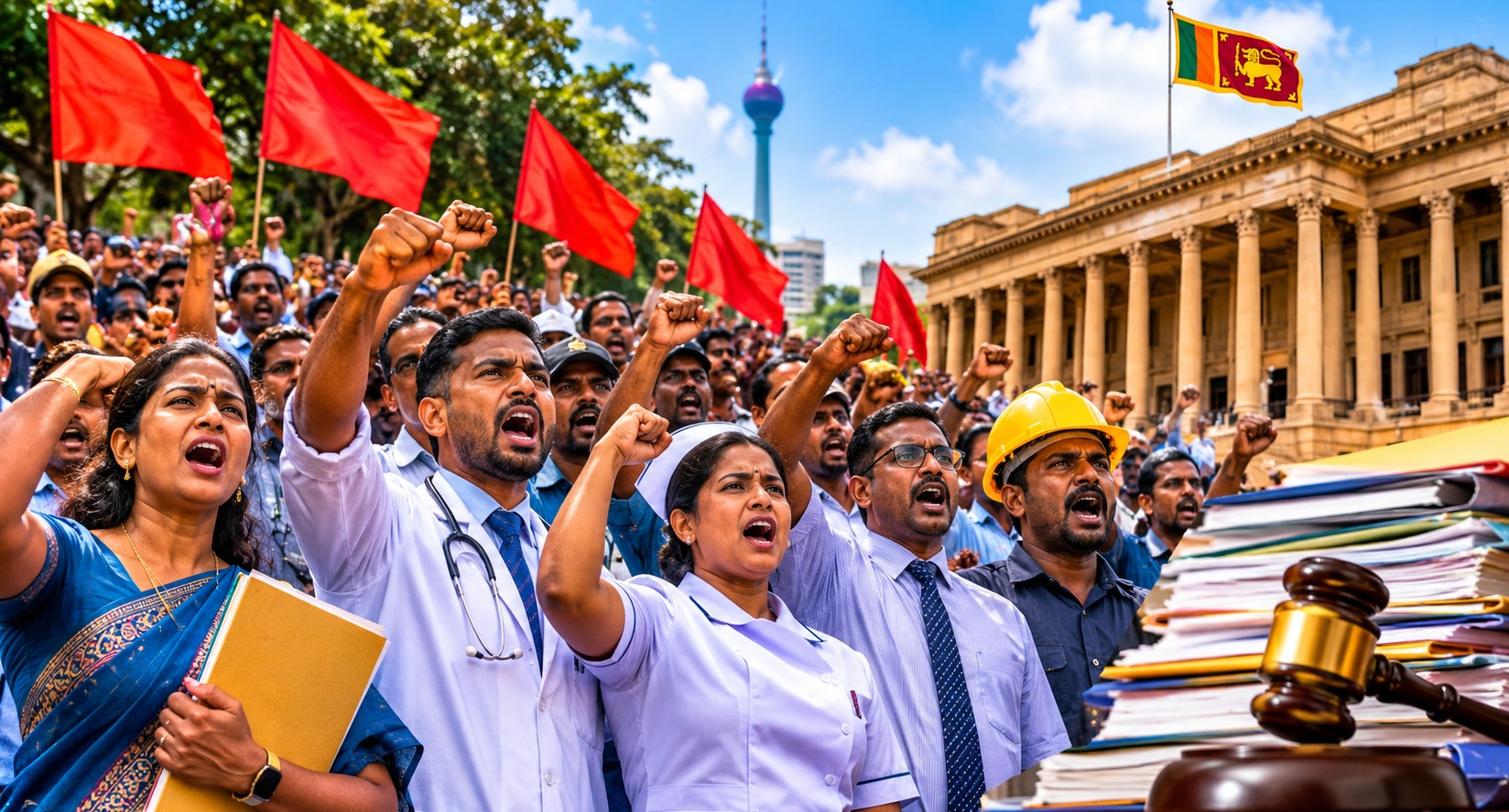
Numerous Trade Unions to Protest Today! Will This Pave the Way for a Nationwide Strike Tomorrow?
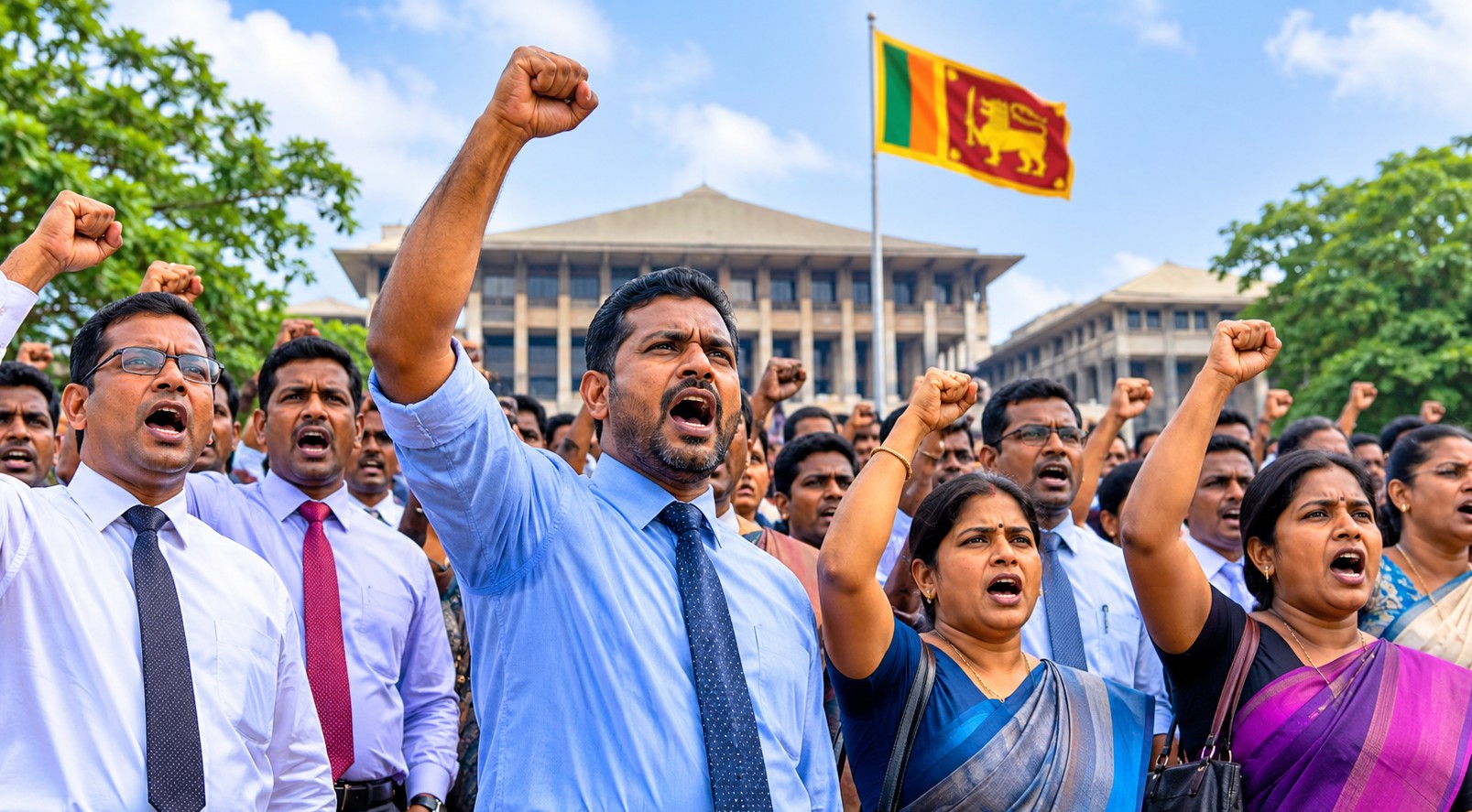
Today (November 23), numerous trade unions representing Sri Lanka’s public sector employees are expected to participate in a joint protest campaign. The main reason behind this action is growing dissatisfaction over the 2027 Budget, which, according to the unions, has failed to provide adequate solutions to public sector employees’ salary demands, allowances and longstanding professional grievances.
The protest movement includes representatives from various sectors of the public service, including teachers and principals, doctors, healthcare workers, Development Officers, Management Service Officers, technical officers, office employees and Samurdhi officers.
Reports indicate that nearly 27 teachers’ and principals’ trade unions alone are preparing to participate in the protest. However, the exact total number of trade unions participating across all sectors has not yet been independently confirmed.
The Government Medical Officers’ Association (GMOA) has also decided that its members will withdraw from routine duties between 12 noon and 2 p.m. to hold meetings at branch level.
This cannot be viewed merely as a one-day protest demanding salary increases. It is part of a broader wave of trade union pressure on the government over its 2027 Budget policies.
What Is the Question Being Raised Against the Government?
The National People's Power (NPP) came to power amid enormous expectations among various sections of society, including public sector employees.
Those expectations included making the public service more efficient, eliminating salary disparities, providing wages that reflect the cost of living, and protecting workers' rights.
However, the fact that public sector employees who voted for the government in the hope of achieving these promises are now preparing to take to the streets against its budgetary policies is politically significant.
The challenge facing the government is to find a fair balance between employees' demands and the country's financial limitations.
Sri Lanka remains in an economic environment where it must maintain fiscal targets under the IMF programme. Therefore, fulfilling all salary demands at once is not an easy task.
However, using financial constraints as a justification to ignore employees' cost-of-living difficulties could also undermine the efficiency and effectiveness of the public service.
What Could Happen Next If Today's Protest Is Successful?
If today's trade union action proves successful, several political and economic developments could follow.
1. The Government May Be Forced to Come to the Negotiating Table
If unity among trade unions and employee participation grow stronger, the government will have to provide a clear response to their demands. Discussions could begin on salary disparities, allowances and phased relief measures.
2. The Trade Union Struggle Could Expand Further
If the government fails to provide an adequate response, the proposed strike action scheduled for November 30 could become a decisive turning point.
If more sectors, including teachers, principals and healthcare workers, join forces, the resulting disruption could affect the everyday lives of the general public across the country.
3. Questions Could Arise Over the Government's Political Credibility
If the protest movement continues to grow, public debate could intensify over the gap between the government's election promises and its practical ability to fulfil them.
4. Additional Pressure Could Be Placed on the Economy
Disruptions to essential services such as education, healthcare and public administration could affect not only ordinary citizens but also the business community.
If prolonged instability develops, there is also a risk that investor confidence could be affected.
This Is Also a Crucial Test for JVP Politics!
There is a political contradiction here that cannot be overlooked.
For decades, the Janatha Vimukthi Peramuna (JVP) has been a political movement that supported trade union struggles and advocated for workers' rights.
Today, however, the main political force within that movement holds state power.
How does a political movement that supported trade union struggles while in opposition respond to those same struggles after coming to power?
This is not a fundamental challenge faced only by the NPP government. It is a challenge confronting any left-wing or working-class-based political movement that assumes power.
Today's Outcome Matters, But So Does What Happens Tomorrow!
The number of employees participating in today's trade union action, the level of unity among the unions, the government's response and decisions regarding future strike action will all influence Sri Lanka's political and economic direction over the coming weeks.
It is too early to conclude that this movement will turn into a campaign to overthrow the government. Equally, it would be unrealistic to claim that all demands can be won through a single day of protest.
But one thing is clear.
Winning public support and securing political power through an election are two different challenges from fulfilling the expectations of the people after coming to power.
Today, public sector employees are placing that second challenge directly before the government.
The real political test today is not simply how many protesters take to the streets. It is what answers the government provides to the questions they are raising.
Jayalathge Sunil Gamini ✍️