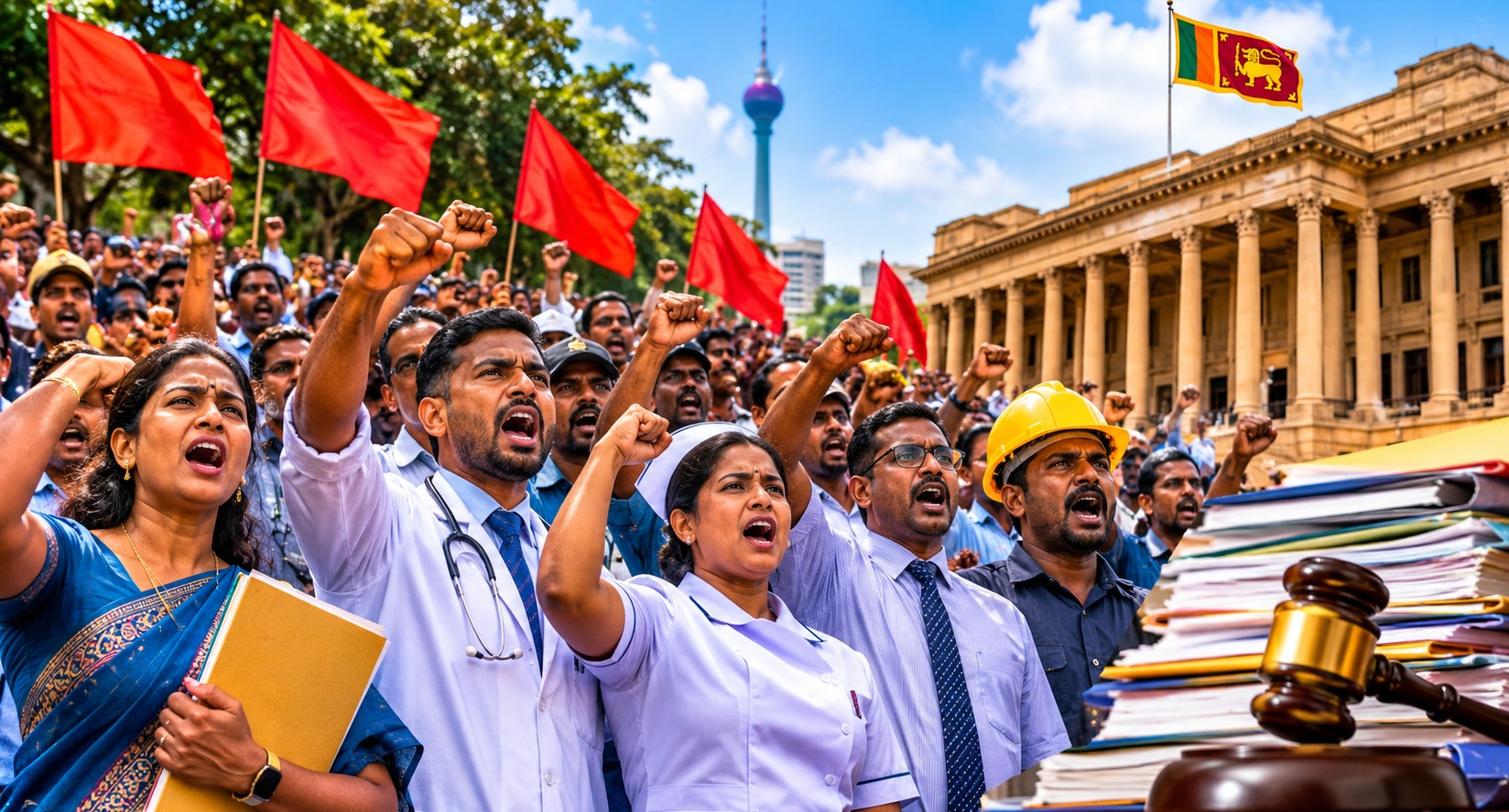
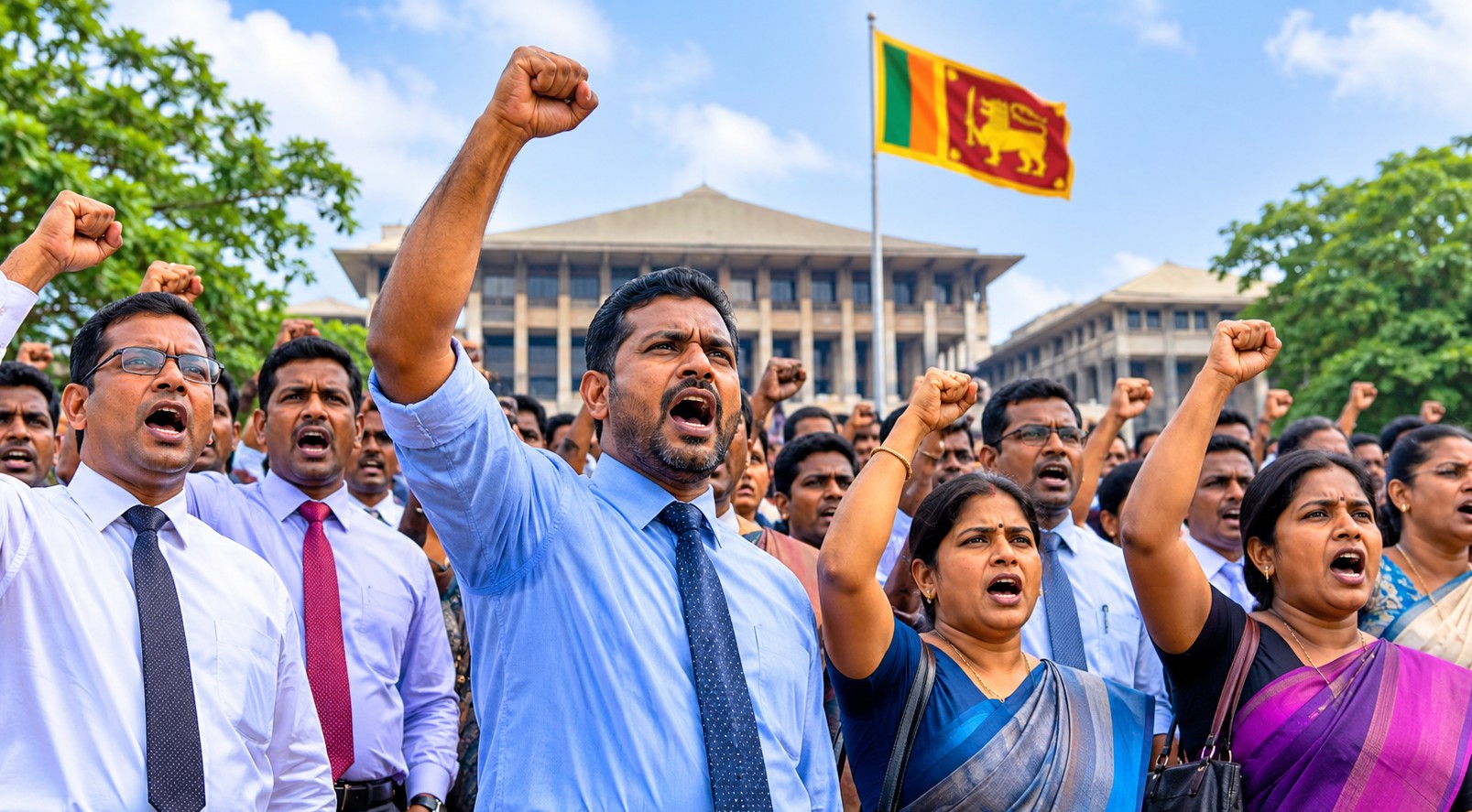
One Year Since Cyclone Ditwah; People Are Still Left Helpless!
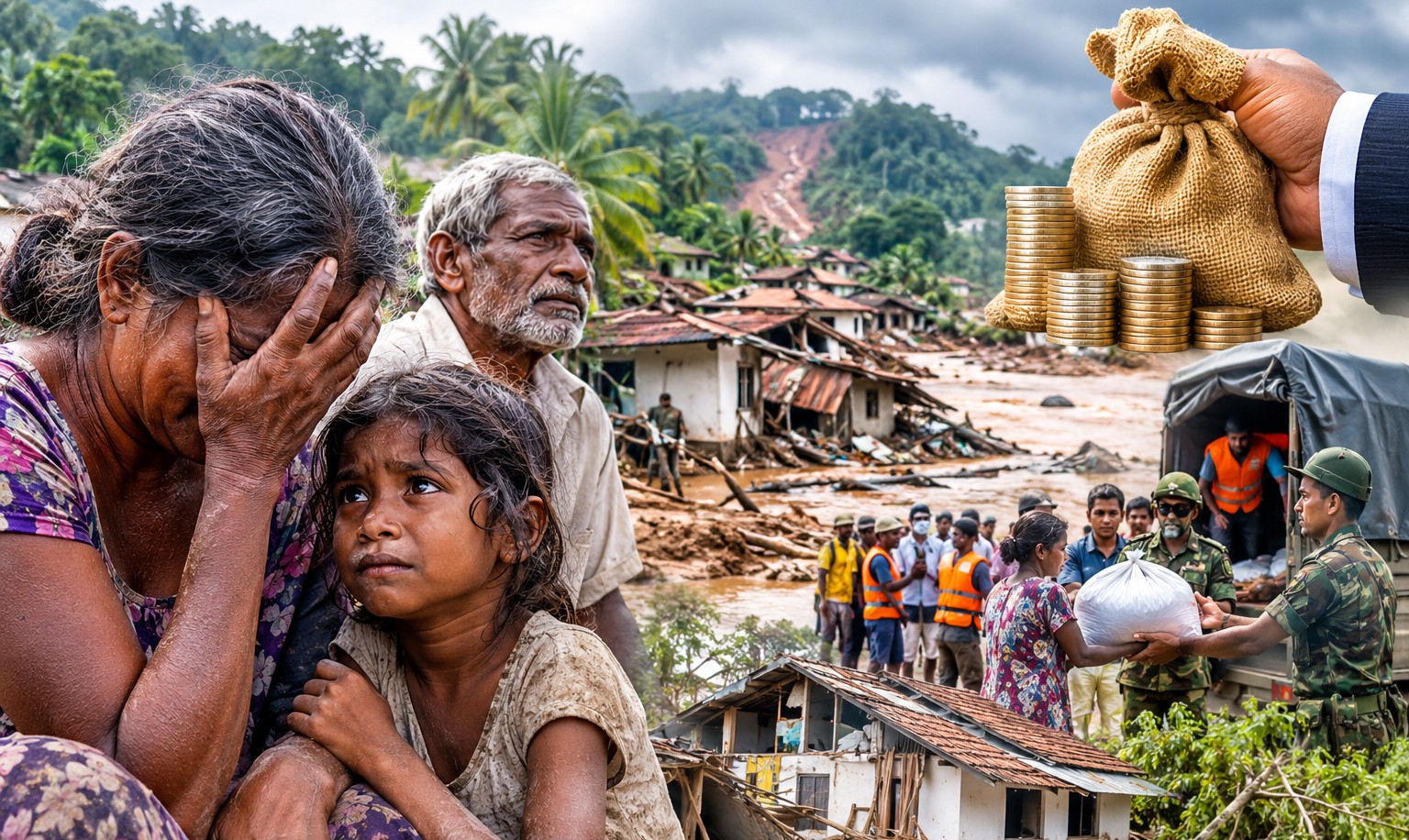
How a Natural Disaster Turned into a Failure of Governance...
A government may not be able to prevent a natural disaster from occurring. However, providing relief to those affected, rebuilding destroyed homes, restoring livelihoods, and helping people return to normal life are fundamental responsibilities of any government.
Looking at what has happened in Sri Lanka following Cyclone Ditwah, one deeply troubling question emerges.
Was there a lack of funds to provide relief to the affected people? Or did the government simply fail to use the available funds properly and on time?
This cannot be dismissed as mere administrative delays. It is a serious test of the efficiency of public administration, accountability, and the government's genuine responsibility towards its people.
2.2 Million People Affected by the Disaster!...
More than 2.2 million people were exposed to the impacts of Cyclone Ditwah, which affected 22 districts in Sri Lanka. According to the Post-Disaster Needs Assessment report prepared by the government and its international partners, approximately 1.2 million people were directly affected.
As of January 19, 2026, 646 deaths had been reported, while 173 people remained missing. Approximately 169,642 people were staying in safety centres or other temporary shelters.
Behind these statistics are families who have lost their homes, people who have lost their livelihoods, children whose education has been disrupted, and citizens who are still struggling to rebuild their lives.
Was There No Money? No. The Money Was Available!
Following the disaster, substantial financial contributions were made by Sri Lankan citizens, the business community, Sri Lankans living overseas, and foreign donors.
According to information released by the Presidential Secretariat, the donations received between November 28, 2025, and April 23, 2026, were as follows:
Domestic donations: Rs. 6.17 billion.
Foreign donations: US$11.49 million.
Total estimated value at the exchange rate prevailing at the time: Approximately Rs. 9.8 billion.
However, on October 11, 2026, The Morning newspaper reported that none of the Rs. 9.8 billion in donations had yet been spent.
Another equally serious issue was that the fund announced to manage these donations, known as the 'Rebuilding Sri Lanka Fund', had not yet been legally established at that time.
What responsibility does the government bear towards people who are waiting for relief, while money donated out of compassion for their suffering remains in bank accounts for months?
Rs. 500 Billion Allocated from the Treasury!...
The government also allocated Rs. 500 billion for disaster recovery and reconstruction through a supplementary estimate.
However, according to a Daily Mirror report dated August 31, 2026, only approximately Rs. 244 billion had been spent during the first six months. This was less than half of the total allocation.
Furthermore, the report revealed that Rs. 71.7 billion of the remaining funds had been redirected in July towards other purposes, including fuel and fertiliser subsidies.
This is an extremely serious situation.
Why did the government have to redirect part of the funds allocated to rebuild homes and restore livelihoods destroyed by the disaster towards other subsidies? How was parliamentary approval obtained for this decision? How will these funds be restored to disaster reconstruction efforts?
The government must provide clear answers to these questions.
Another Serious Revelation in the 2027 Budget!...
In the 2027 Budget Speech presented on November 13, 2026, the government itself acknowledged that funds from the Rs. 500 billion supplementary allocation approved in 2026 for Ditwah reconstruction had remained unutilised.
The Budget Speech also stated that Rs. 260 billion of these unspent allocations would need to be carried forward into 2027.
In other words, the government has been unable to utilise a substantial portion of the funds allocated to restore people's lives after the disaster within the intended period.
This is confirmed by the government's own Budget Speech.
Why Are People Still Helpless Despite the Availability of Funds?
There are also arguments that the government could put forward in its defence.
Officials have pointed out that delays in certain payments have been caused by issues relating to land ownership, the relocation of people from lands exposed to landslide risks, finding suitable alternative land, and obstacles within the construction process.
However, the existence of such difficulties does not absolve the government of its responsibilities.
When a disaster occurs, a government's responsibility is not limited to protecting people's lives. It must also ensure that an efficient state mechanism is in place to help them rebuild those lives.
If funds are available, they must reach the people. If money has been allocated, there must be practical plans to implement the projects. If obstacles exist, there must be a time-bound programme to resolve them.
Yet what we see here is a situation in which, despite the availability of funds and budgetary allocations, and despite the passage of several months, the process of rebuilding people's lives has been subjected to serious delays.
Where Is the 'System Change'?
The National People's Power (NPP) government, which came to power promising a 'system change', is now confronted with some very straightforward questions.
Can it properly manage taxpayers' money? Can it ensure that donations received from foreign countries and the public are used for their intended purposes?
Can it provide timely relief to people affected by disasters? Can it establish effective coordination among state institutions?
If the government cannot provide satisfactory answers to these questions, then no matter how grand its promises may have been on political platforms, those promises are of little value to the people.
What Are We Demanding?
Immediately publish a comprehensive financial statement detailing all domestic and foreign donations received for the Ditwah disaster.
Present separate reports on the Rs. 500 billion allocated by the Treasury, specifying how much has been spent, how much remains unspent, and how much has been transferred to other purposes.
Publish the latest statistics on families who have lost their homes and those who have still not received adequate assistance.
Clearly announce which projects will be funded using the remaining allocations and specify deadlines for their completion.
Conduct a special audit by the Auditor General covering the entire disaster relief and reconstruction process.
Finally...
The occurrence of a natural disaster is not the fault of a government. However, if sufficient funds are available to assist disaster victims, yet people continue to remain helpless because of poor management and administrative failures, that amounts to a serious failure of governance.
Instead of building political publicity campaigns on the tears and suffering of the people, rebuilding their lives must be the government's foremost responsibility.
A government should not be judged by the promises it makes, but by how responsibly and promptly it fulfils its obligations towards those who have been left vulnerable.
The money was there. Donations were received. Budgetary allocations were made. Yet, if the people are still waiting, the present administration cannot escape responsibility for that prolonged suffering and uncertainty.
Jayalathge Sunil Gamini ✍️