The Danger of Dragging Democracy and the Economy into the Abyss
A Critical Look at the Prevention of Organised Crime Bill...
Suppressing organized crime, drug trafficking, and underworld activities in a country is, without a doubt, an immediate and rigorous national mission that must be undertaken.
Ensuring the safety of the ordinary citizen’s life and property is a fundamental responsibility of a government. However, while keeping this supreme objective in mind, we cannot dismiss the views raised by domestic and international parties regarding the ‘Prevention of Organised Crime Bill’—not only in terms of appreciating its intent, but also concerning the serious legal and economic consequences it may entail.
Although it is claimed to be based on the United Nations Convention against Transnational Organized Crime (UNTOC), the Human Rights Commission of Sri Lanka (HRCSL), senior legal professionals, and international observers such as CIVICUS Monitor have strongly pointed out that certain provisions of this Bill severely jeopardize fundamental human rights, the rule of law, and the country's future economic stability.
Serious Legal and Human Rights Risks of the Bill.....
A broad analysis of the provisions in this Bill raises the following fundamental issues:
Arbitrary Arrests and Profiling Based on External Characteristics:
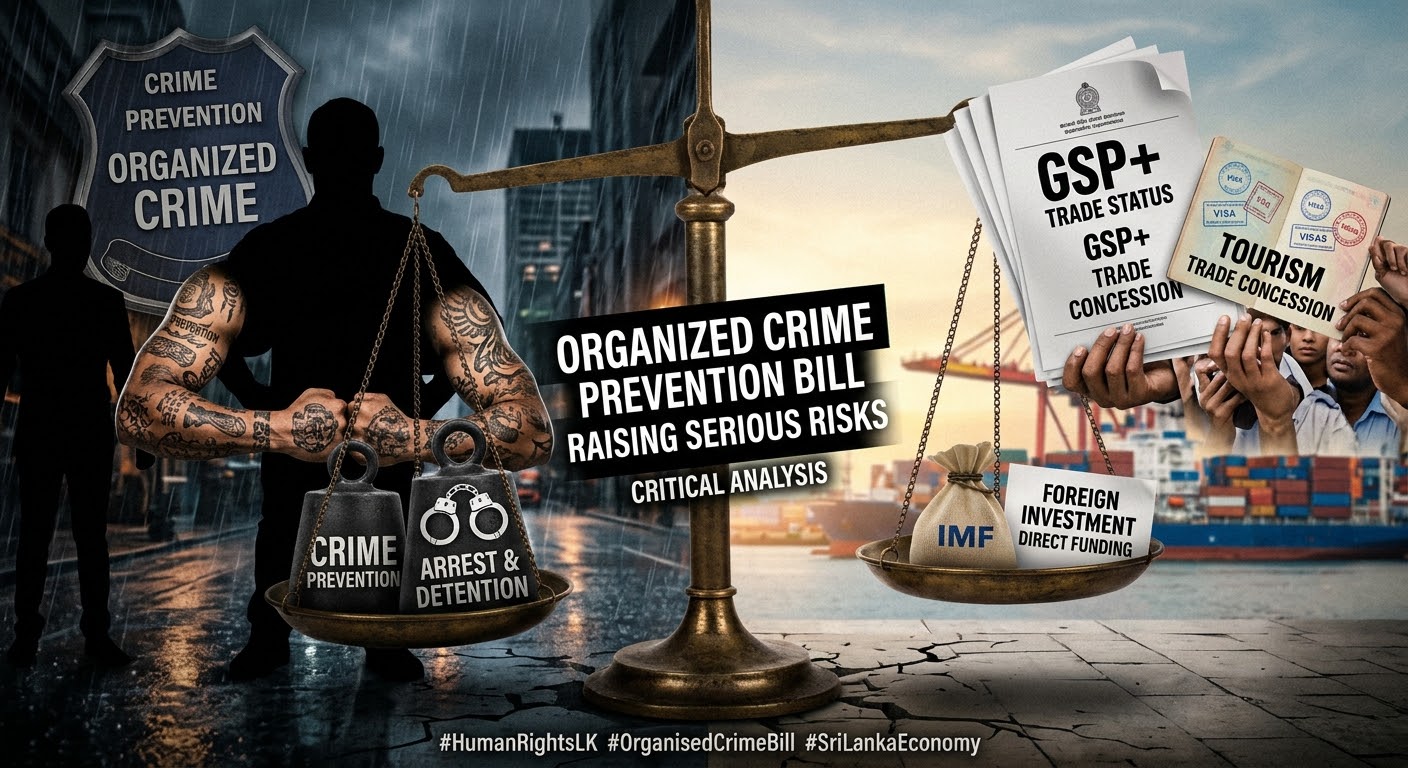
The problematic nature of the Bill lies in allowing legal scope to suspect or conclude that a person is a member of an organized crime gang based solely on external characteristics such as their clothing, body tattoos, or hairstyles. This is a direct attack on personal freedom and paves the way for the arbitrary exercise of police powers.
Prolonged Detention and Denial of the Right to a Fair Trial:
It is proposed to allow suspects to be detained for extended periods (up to 72 hours) without any warrant, and to restrict bail-granting powers solely to the High Court, removing them from ordinary courts. This completely contradicts the internationally accepted principle of the 'Presumption of Innocence'.
Suppression of Civil and Democratic Rights:
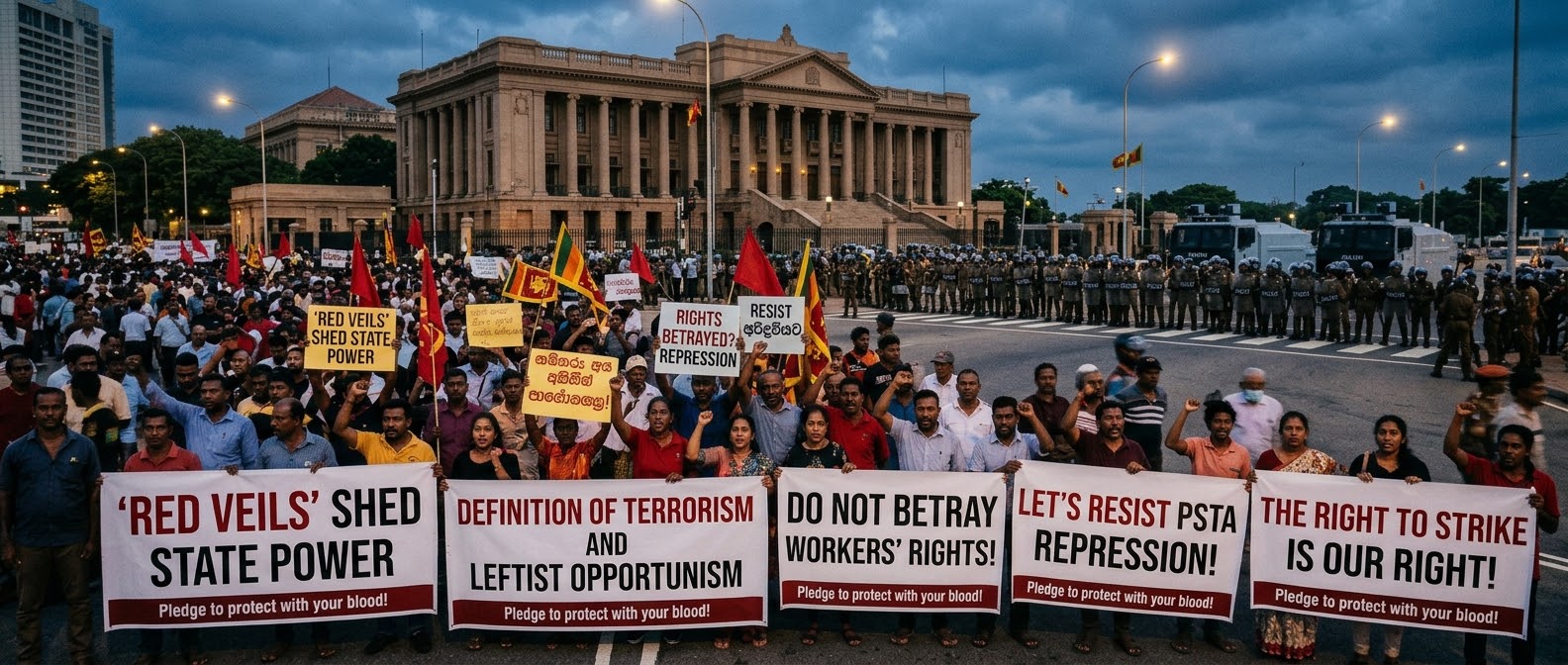
The definition of an "organized crime gang" is extremely broad and vague. As a result, trade unions, civil organizations, journalists, or even peaceful protesters raising their voices against the government in the future run the risk of falling into the trap of this law.
Severe Potential Impacts of This Bill on Sri Lanka's Economy.....
If international standards are disregarded in the name of crime suppression, Sri Lanka—which is already striving to recover from a severe economic crisis—will have to face the following financial and trade pressures:
Risk of Losing the European Union's GSP+ Tax Concession:
The GSP+ tax concession granted by the European Union has been the lifeblood of Sri Lanka’s export sector, particularly the apparel industry. This concession is granted on the condition of implementing 27 international conventions concerning human rights, labor rights, and good governance. If it is internationally confirmed that human rights are deteriorating within the country and arbitrary laws are being enforced, the loss of this tax concession would be a fatal blow to the nation's foreign exchange earnings.
Stagnation of Foreign Direct Investments (FDI):
Before entering a country, foreign investors primarily look for the 'Rule of Law' and transparency. International investors will by no means come forward to invest in a country with a legal system that threatens personal freedom and business security.
Impact on International Monetary Fund (IMF) and World Bank Aid:
In the current economic reform process, institutions such as the IMF, the World Bank, and the Asian Development Bank (ADB) strictly adhere to 'Governance Diagnostics' criteria. The enactment of laws that weaken democratic structures could jeopardize relations with these international institutions and threaten the disbursement of approved financial aid installments.
It is true that strict laws against criminals are necessary to ensure national security. However, abolishing citizens' basic human rights and violating international standards under the noble banner of "crime suppression" will pave the way for the country's long-term isolation.
Ignoring the concerns raised by international and domestic parties and passing this Bill without amendments will result not only in suppressing the underworld, but also in plunging the entire country into economic, commercial, and human rights darkness.
Therefore, it is the responsibility of those in charge to subject this Bill to comprehensive amendments in a manner that protects the rule of law, fundamental rights, and the international image!
Sunil Gamini Jayalathge ✍️