COP31 Summit: Final Agreement Collapses
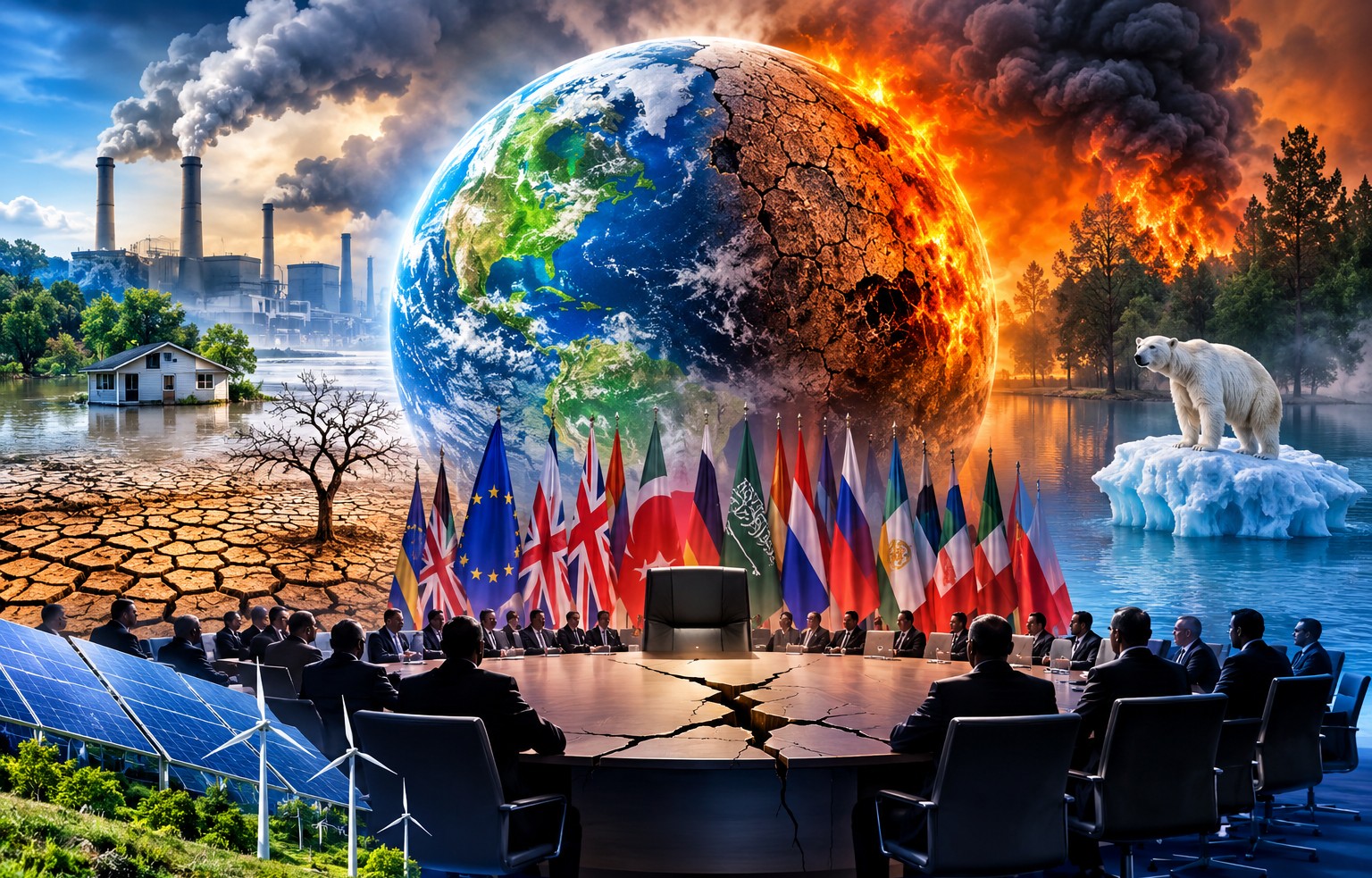
The world is currently facing a massive crisis in the form of climate change. Rising global temperatures, extreme rainfall, floods, droughts, wildfires and rising sea levels are no longer merely warnings about future dangers. They are already having a direct impact on the lives of people around the world.
Yet, a serious political conflict has emerged within the very international climate conferences where world leaders gather to discuss ways of addressing this crisis.
The latest example is the crisis that unfolded during the final negotiations of the COP31 climate summit held in Antalya, Türkiye.
At the centre of the dispute was fossil fuel, one of the primary drivers of global climate change.
The main challenge was to reach a clear international agreement on gradually phasing out the use of coal, oil and natural gas.
However, a revised draft agreement presented on November 19 had removed all direct references to fossil fuels.
The European Union, the United Kingdom and several other countries opposed this revision. The European Union's position was that it could not accept an agreement that did not even mention fossil fuels.
On the other side, countries such as Saudi Arabia and Russia, whose economies depend heavily on the production and export of fossil fuels, opposed strong commitments of this nature.
Ultimately, these disagreements prevented the adoption of the main final political agreement, known as the Antalya Pact.
However, it should also be noted that certain other decisions of the summit were adopted.
This Is the Real Question Facing Global Politics!
Under the 2015 Paris Climate Agreement, the world committed to keeping the rise in global temperatures well below 2°C above pre-industrial levels, while pursuing efforts to limit the increase to 1.5°C.
At the 2023 COP28 summit in Dubai, countries also reached a historic agreement to transition away from fossil fuels.
Yet, three years later, the world's governments are still struggling to reach a consensus on how to implement that commitment.
This raises an important question: Have economic and geopolitical interests become more influential than scientific evidence in determining how the world responds to the climate crisis?
For countries that earn enormous revenues from fossil fuel production and trade, accepting a rapid energy transition is far from easy.
On the other hand, small island nations and developing countries, which are among those most severely affected by climate change, are demanding stronger international action to protect their future and survival.
Another important injustice also emerges here: people in poorer countries, which have contributed relatively little to climate change, are often forced to suffer disproportionately from its consequences.
For island nations such as Sri Lanka, this crisis is not merely a matter of international political debate. Floods, landslides, droughts, agricultural damage and coastal erosion directly affect the country's economy and the lives of its people.
To control climate change, the world must reach an agreement on addressing its fundamental causes. However, the COP31 crisis demonstrates just how difficult it is to achieve international consensus when those causes are closely connected to economic power and political influence.
While world leaders hold climate conferences and speak about protecting future generations, what practical value do these summits have if they cannot agree on the energy policies that will determine the future of those very generations?
Climate change recognises no national borders. Yet international politics surrounding solutions to this crisis continues to revolve around national economic interests, energy markets and the priorities of powerful states.
The question is not whether the world is facing a climate crisis. The real question is whether the world's powerful nations have the political will to find solutions to it.
Jayalathge Sunil Gamini ✍️